Simplified’s Brand Brain is designed to give its AI tools reusable context about a business. Instead of reviewing it with a demo brand, I tested it with AIContent-Tools.com. That produced a much more useful result: Simplified tried to fetch my website, hit an HTTP 403 error, still created brand context, and later a separate Brand Info Generator returned null for the same site.
I like the idea of Simplified Brand Brain more than I trust automatic brand extraction without checking it. The finished Brand Brain gives Simplified a useful place to store voice, audience, visual preferences, rules and other context. That can save a lot of repeated prompting.
But my test also showed why brand context should not be treated as automatically correct. Simplified’s website-fetch step returned a 403 error, yet brand information was still produced. Later, another Simplified automation trying to analyze the same website returned brand_analysis: null. My conclusion is simple: use Brand Brain as editable working context, not unquestioned truth about your business.
What is Simplified Brand Brain?
Brand Brain is Simplified’s system for keeping reusable information about a brand. The goal is to avoid explaining the same company, audience, tone and visual direction every time you create new content.
That makes sense in a platform like Simplified because the same brand context can potentially influence writing, Riley workflows, social media content, design and other AI tools.
The key question is not whether storing brand information is useful. It obviously can be. The more important question is: how well does Simplified create and use that context when you give it a real website?
I used the real AIContent-Tools website as the brand source
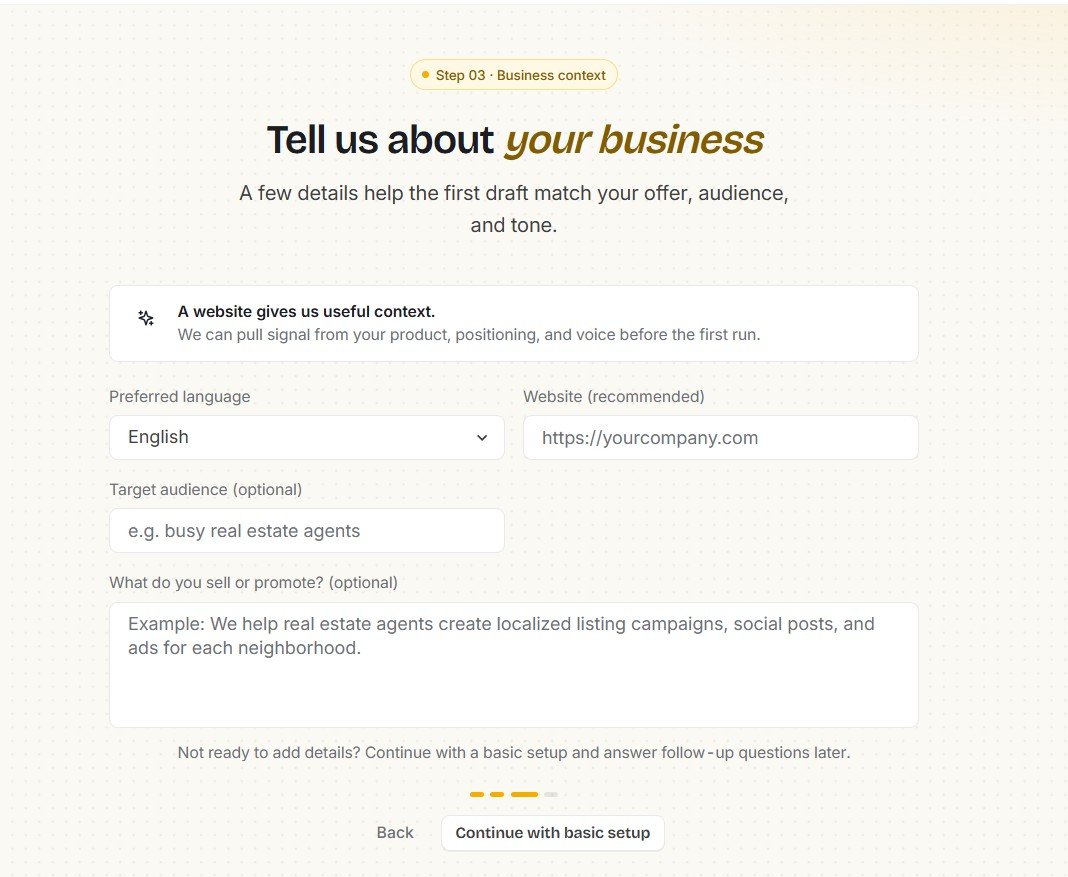
Step 1: Simplified asked for business context during onboarding
Before the more automated parts of the test, Simplified asked for basic business information. The onboarding screen included fields for a website, language, target audience and business description.
I actually like this approach. A brand system should not rely entirely on scraping a website. Giving the user a chance to supply context directly can make the final profile more useful, especially when a website does not explain every important detail clearly.
Step 2: Website Fetch failed with HTTP 403
The first major issue appeared when the AI agent tried to fetch AIContent-Tools.com. The Web Fetch action returned HTTP 403 Forbidden.
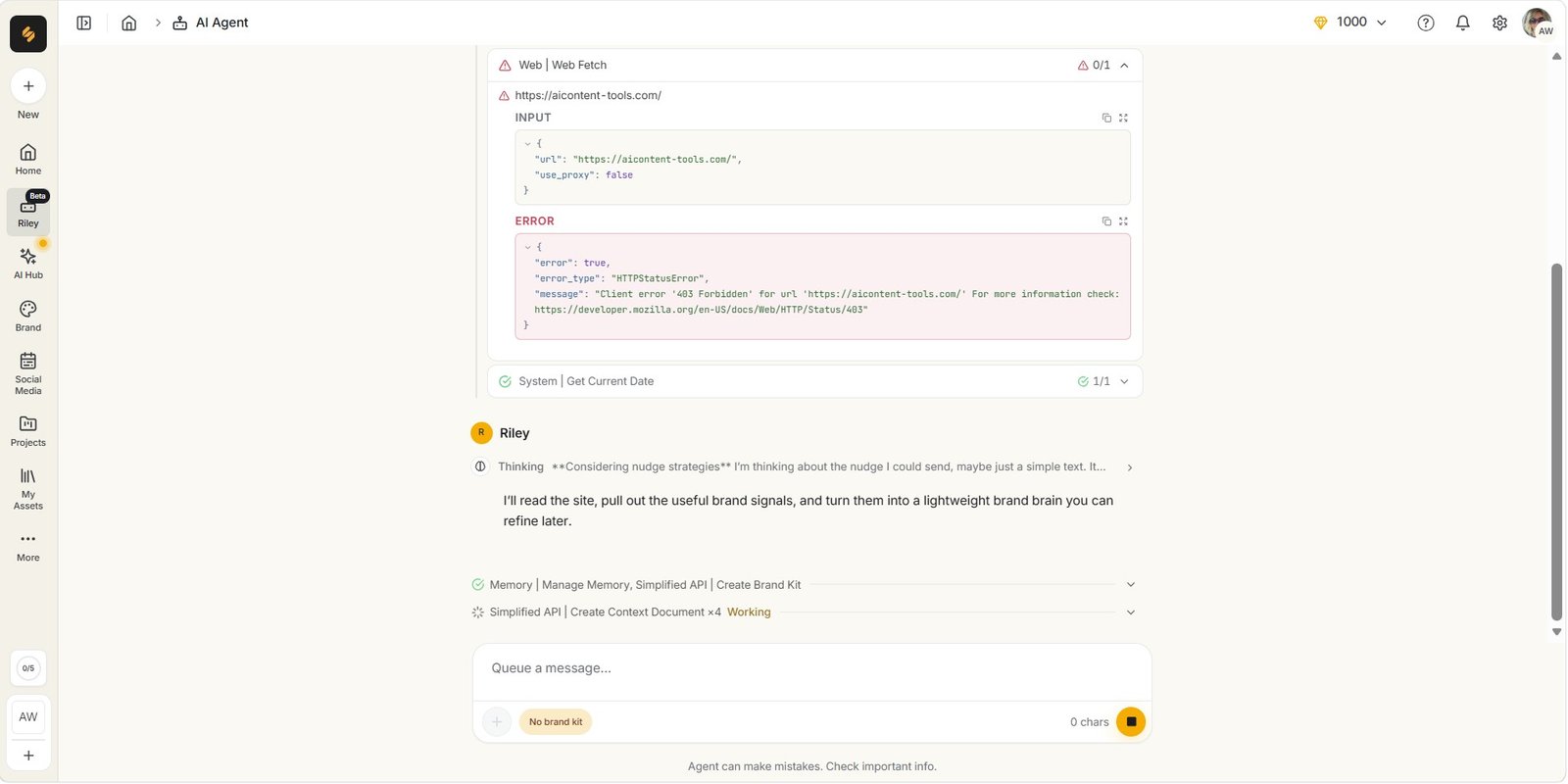
I would not automatically blame Simplified for every 403 response. Websites can block automated visitors and scraping tools. But from a user’s point of view, the important fact is that the agent did not successfully retrieve the website through this Web Fetch step.
This becomes important when judging whatever the AI creates afterward. If website retrieval fails, I need to ask: what information did the system actually use to build the brand profile?
The surprising part: Simplified continued creating the Brand Kit
The workflow did not stop after the fetch error. Simplified continued processing brand information and showed a Brand Kit creation process.
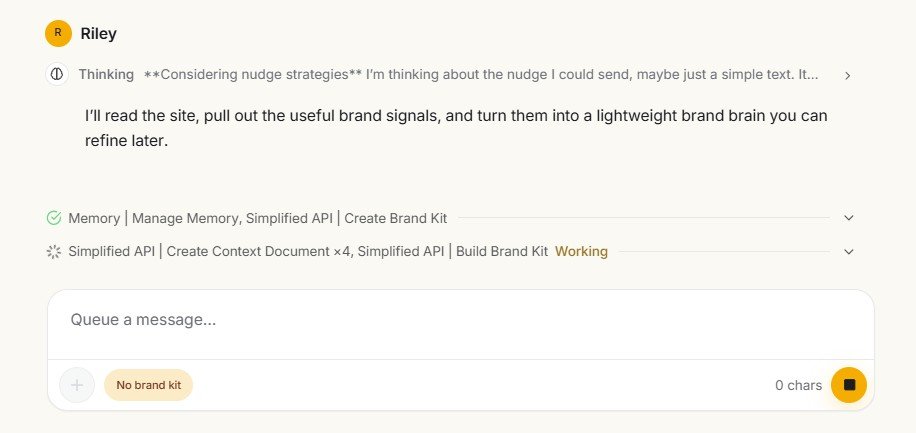
This is neither automatically good nor automatically bad.
It is good that one failed technical step does not destroy the whole onboarding process. Simplified may still have information from the details I supplied manually or other context available inside the workflow.
But it also means I would not describe the final Brand Brain as “information successfully extracted from my website” without qualification.
What did Simplified put inside my Brand Brain?
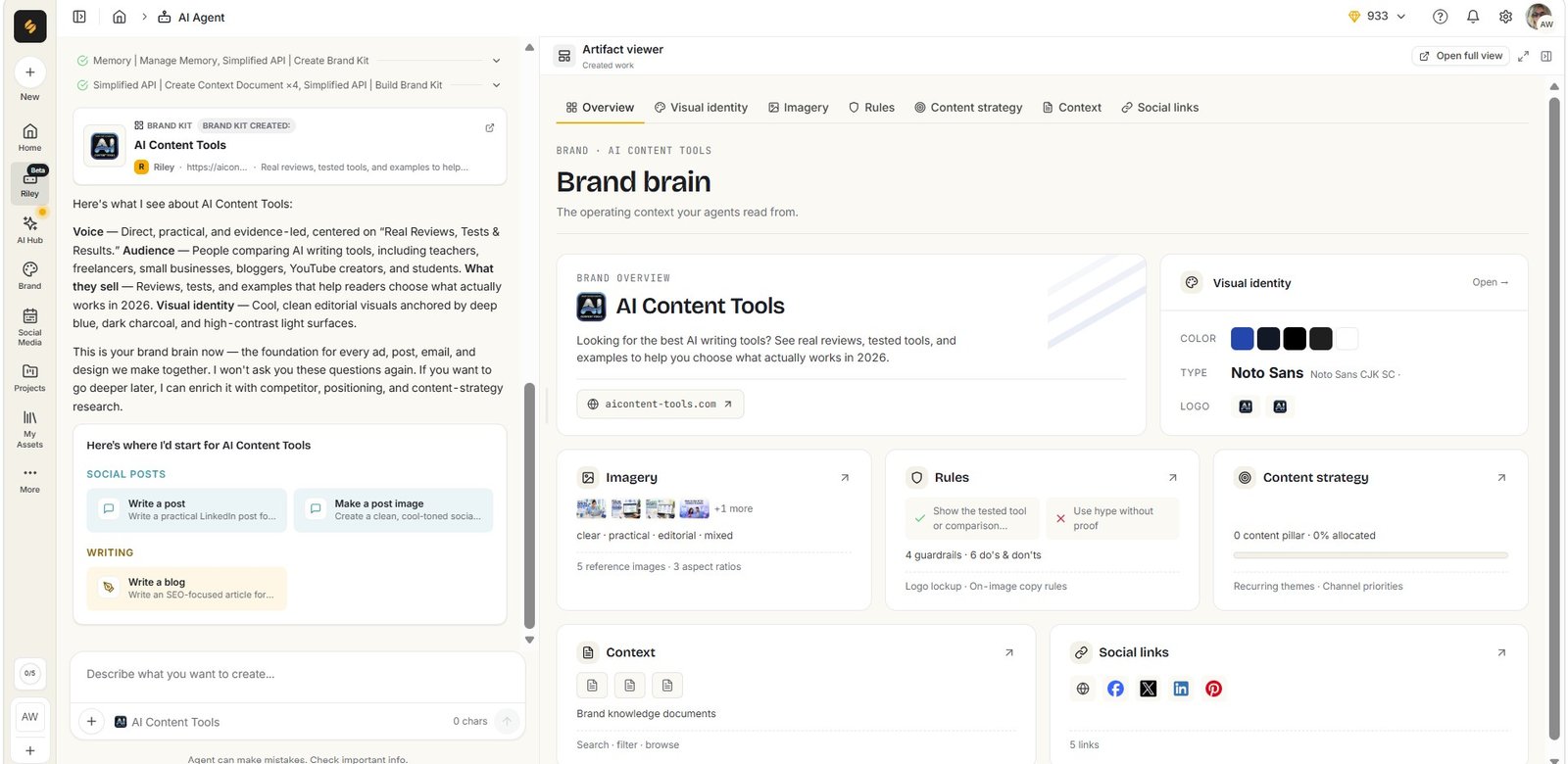
The completed Brand Brain was much more detailed than a simple company-name-and-color profile. The overview showed categories covering areas such as visual identity, imagery, rules, content strategy, context and social links.

I also captured another view of the generated AIContent-Tools brand profile showing areas such as voice, audience, offer, visual identity, rules and context.
This is the strongest idea behind Brand Brain
If the profile is accurate, this type of persistent context can save time. Instead of writing something like:
“My audience is AI beginners, bloggers, freelancers and small businesses. Use clear English, practical examples, avoid hype, and keep the tone educational.”
every time, the platform can keep reusable instructions attached to the brand.
That becomes especially useful when several different Simplified tools need the same context. A social post, blog article and Riley task should ideally feel like they came from the same business, not three completely unrelated AI sessions.
Brand Brain also controls visual preferences
I found the imagery settings particularly interesting because brand consistency is not only about writing tone.
The Brand Brain imagery area included controls related to visual styles, moods, preferred subjects, image proportions and things the brand should avoid.
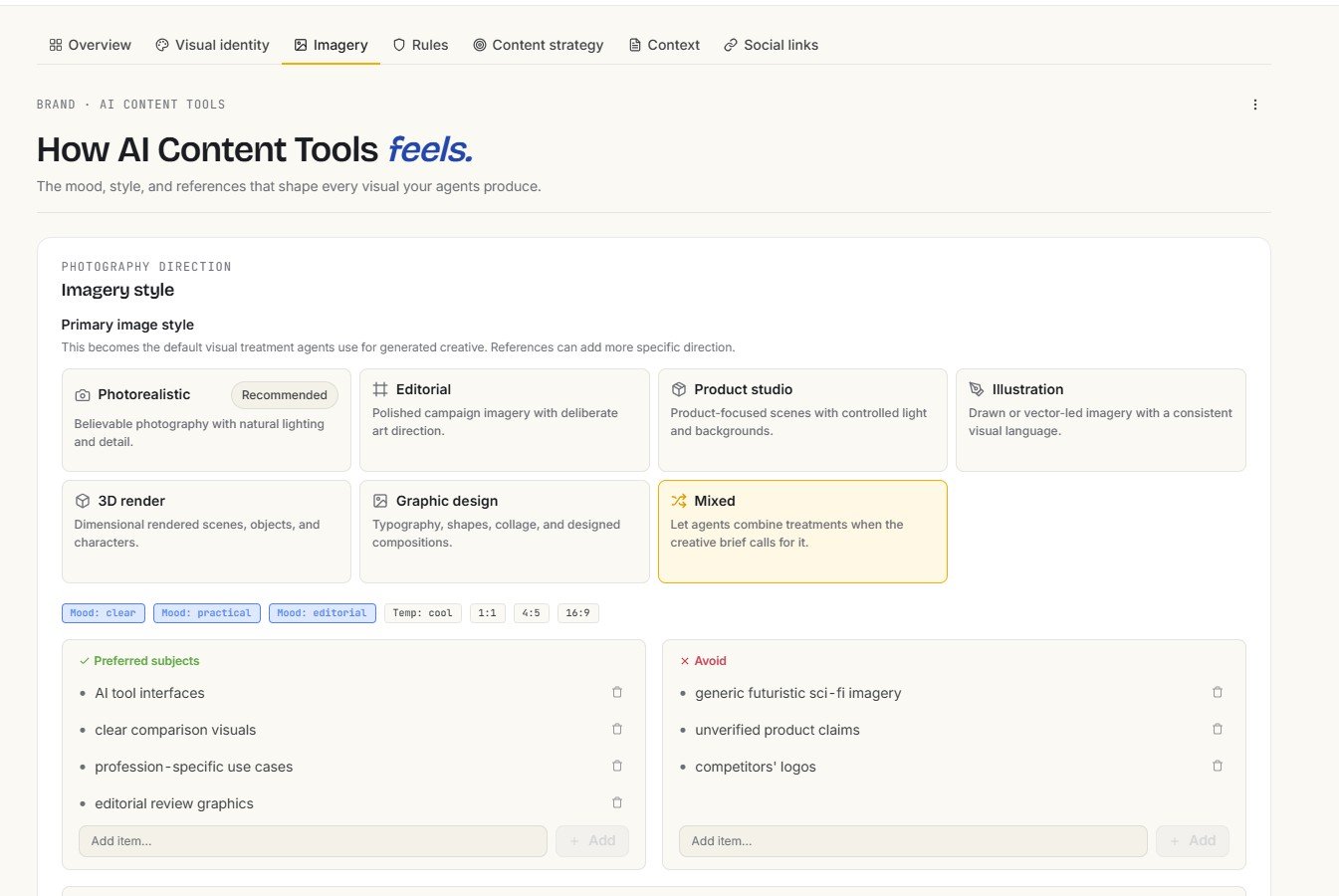
Many AI brand tools focus almost entirely on tone of voice. Simplified’s imagery controls recognize that a brand can also become inconsistent through visuals. Preferred styles plus things to avoid can be more useful than a vague instruction such as “make it professional.”
But I would review every important Brand Brain field manually
The failed website fetch changes how I would use the finished profile.
I would not create Brand Brain once and then assume every saved field is correct forever. I would treat it like an AI-generated first draft of the brand rules.
Check the audience
Make sure Simplified has not made the audience too broad, too narrow or simply guessed from generic industry language.
Check voice and writing rules
AI-generated labels such as “professional,” “friendly” or “bold” can be too vague. Replace them with instructions that actually affect future content.
Review visual preferences
Remove styles and subjects that do not fit the brand. Add clear visual exclusions if consistency matters.
Check business facts
Verify descriptions of your offer, target users, products and positioning before those details are reused in future AI outputs.
Update the profile when the business changes
Persistent context becomes harmful if it keeps teaching the AI old information. A useful Brand Brain needs maintenance.
Then I tested another Simplified brand tool with the same website
This is the part that makes the test much more useful than a normal feature tour.
Simplified also had a Brand Info Generator automation. I entered AIContent-Tools.com again to see whether this separate workflow could analyze the site and return brand information.
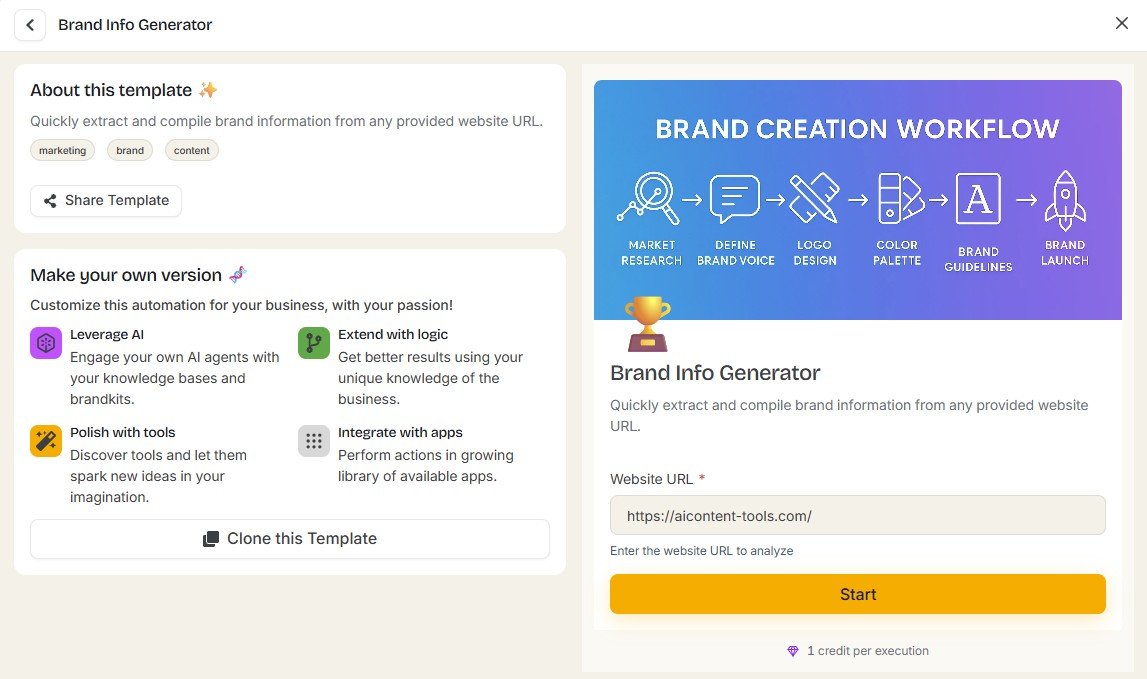
The automation started processing the supplied site and displayed an “Executing tasks…” state.
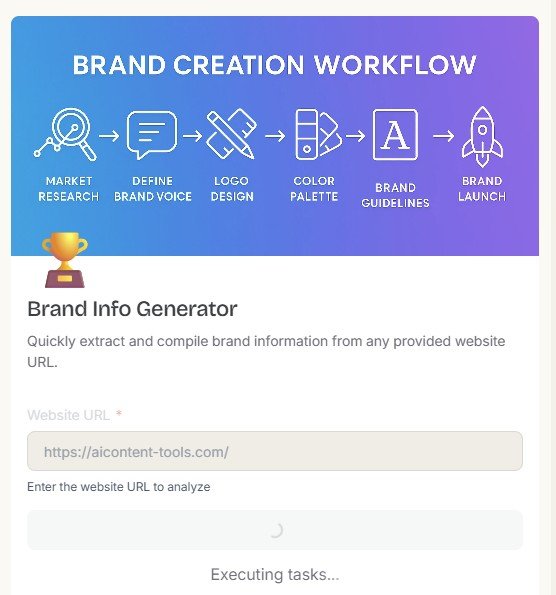
The final Brand Info Generator result was null
Instead of returning extracted brand information, the final output showed: brand_analysis: null.
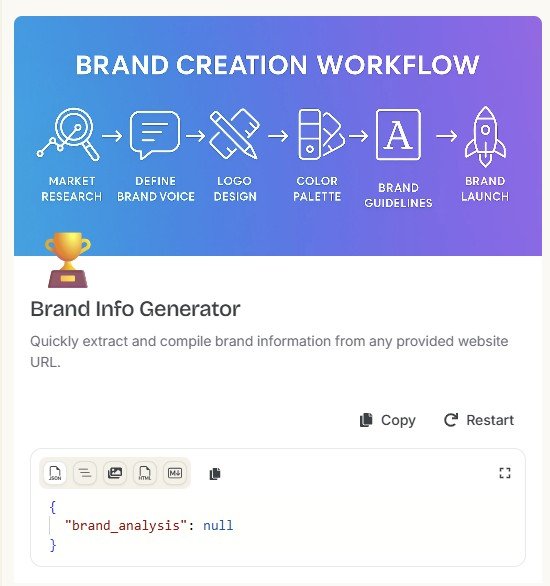
The website-fetch step showed a 403 error, but Simplified still produced a populated Brand Brain with multiple categories.
The separate automation using the same website finished without useful extracted brand information.
This inconsistency is more interesting than either result alone
If I had tested only Brand Brain, I could have concluded that Simplified successfully understood the brand despite one temporary fetch issue.
If I had tested only Brand Info Generator, I could have concluded that Simplified simply could not analyze the website.
Having both results gives a more realistic picture: different Simplified features did not behave the same way with the same site.
What might explain the difference?
I cannot prove exactly which internal sources or fallback methods Simplified used during each workflow, so I would not invent an explanation.
There are several possibilities:
- The Brand Brain workflow may have combined information I entered manually with other available context.
- The two features may use different retrieval or processing workflows.
- The website may have been accessible to one part of the system differently than another.
- The Brand Info Generator automation may simply have failed during this individual run.
What I can document is the observable result: 403 during one brand workflow, a populated Brand Brain afterward, and a null result from the separate Brand Info Generator.
What Simplified Brand Brain did well in my test
Strengths I observed
- Stores reusable brand context instead of starting every prompt from zero
- Includes audience, voice, rules and other business information
- Extends beyond writing into visual and imagery preferences
- Lets users provide business context manually during setup
- Can support other Simplified tools such as Riley and AI writing
- Brand workflow continued even after a website-fetch problem
Limitations I observed
- Web Fetch returned HTTP 403 for my website
- A completed Brand Brain can hide uncertainty about what source data was actually retrieved
- AI-generated brand information still needs manual verification
- A separate Simplified Brand Info Generator returned brand_analysis: null
- Different brand-analysis workflows gave inconsistent outcomes with the same website
Brand Brain is valuable because of what happens later
A brand profile is not very useful if it only sits on a settings page. Its real value appears when other AI tools use it.
I saw this connection during my other Simplified tests. Brand context appeared inside Riley workflows, and Simplified’s blog-generation settings allowed a Brandbook to be selected before generating content.
That means Brand Brain potentially becomes a shared layer underneath several different content tasks.
This is why getting the underlying context right matters. One incorrect brand rule can potentially affect many future outputs instead of only one prompt.
How Brand Brain affected my Simplified AI Writer test
In my Instant Blog test, Simplified allowed me to choose an existing Brandbook before generating the article. That is a sensible workflow because the AI does not have to guess the brand style each time.
The Brandbook integration itself was not the main problem in that test. The bigger issue was that two Instant Blog generations produced sections with missing paragraph content.
You can see the complete experiment in my Simplified AI Writer review .
How Brand Brain fits into Riley
Riley also used brand context during my tests. For example, when I asked Riley to create LinkedIn posts, one of the visible workflow steps involved loading brand context before writing.
That makes Brand Brain much more meaningful than a decorative brand profile. It can influence agent workflows.
At the same time, it increases the need to verify the saved information. If Riley repeatedly uses bad brand context, the error becomes repeatable too.
My full agent tests are in the Simplified Riley review .
Who is Simplified Brand Brain best for?
- Small businesses that repeatedly create content for the same brand
- Freelancers and agencies that need separate context for different clients
- Content teams that want shared voice and visual rules
- Users working across several Simplified tools rather than one isolated generator
- Brands willing to review and maintain their AI context
Who may not need it?
- Someone who uses Simplified for one-off tasks only
- Users expecting perfect automatic website analysis
- Businesses unwilling to review AI-generated brand information
- People who already maintain detailed brand prompts elsewhere and do not need Simplified’s wider ecosystem
Brand Brain vs. simply pasting a brand prompt
You can create reusable brand instructions in many ways. A saved prompt in ChatGPT, a document with writing rules or a custom instruction set can all hold brand context.
Brand Brain’s advantage is convenience inside Simplified. The context can potentially be reused across writing, Riley and social workflows without manually pasting the same instructions again.
| Need | Manual brand prompt | Simplified Brand Brain |
|---|---|---|
| Save brand voice | Yes | Yes |
| Save audience information | Yes | Yes |
| Visual preferences | Possible, but usually manual | Dedicated imagery settings |
| Reuse across Simplified tools | Requires copy/paste or separate setup | Built into the platform concept |
| Automatic website analysis | No | Attempted in my workflow, but website fetch had problems |
| Human verification still needed | Yes | Definitely yes based on my test |
Try Simplified with a real brand you already know well
I think that is the best way to evaluate this feature. If you already know the business, audience and brand rules, you can quickly see what Simplified understands correctly and what needs correction.
Try SimplifiedAffiliate disclosure: this is an affiliate link. If you sign up through it, AIContent-Tools may earn a commission at no extra cost to you. This does not change the test results or verdict in this review.
My final verdict on Simplified Brand Brain
Useful persistent context — but I would never let the AI define my brand without checking it.
I think Simplified is solving a real problem with Brand Brain. Repeating your audience, tone, visual direction and business context in every AI prompt is inefficient. A shared brand layer can make writing, Riley and social workflows more consistent.
I also liked that Brand Brain goes beyond text. The imagery settings allow the user to define visual styles, moods, preferred subjects and things to avoid. That makes the feature more useful for a platform that also creates visual content.
But my real website test exposed an important limitation. Simplified’s Web Fetch returned HTTP 403 Forbidden while trying to access AIContent-Tools.com. The workflow still created a populated Brand Brain. That means I cannot simply assume every generated brand detail came from a successful analysis of the site.
The later Brand Info Generator test made me even more cautious. Using the same website, that separate Simplified automation eventually returned brand_analysis: null.
These two outcomes do not make Brand Brain useless. They change how I would use it.
I would treat Simplified Brand Brain as an editable brand knowledge base, not an automatic authority on my company. Let the AI create a starting point, then verify the audience, business facts, voice, rules and visual preferences yourself. Once the context is correct, its ability to reuse that information across several Simplified tools becomes much more valuable.
Frequently asked questions
What is Simplified Brand Brain?
Brand Brain is Simplified’s system for storing reusable information about a brand, including areas such as audience, voice, visual identity, imagery, rules and business context. The goal is to reuse this information across future AI content workflows.
Can Simplified create brand information from a website?
Simplified attempted to use my website during the brand setup. In my test, however, the Web Fetch step returned HTTP 403 Forbidden. Brand context was still created afterward, so I recommend checking which information is accurate rather than assuming it all came directly from the website.
What information can Brand Brain store?
In the interface I tested, Brand Brain included areas related to visual identity, imagery, rules, content strategy, context and social links. Another generated view also showed information such as voice, audience and offer.
Does Simplified Brand Brain include visual brand settings?
Yes. I found imagery settings for visual styles, moods, preferred subjects, image proportions and subjects or imagery to avoid.
Did Simplified correctly analyze AIContent-Tools.com?
The result was mixed. A Brand Brain was created, but the website-fetch step showed HTTP 403 Forbidden. Later, a separate Brand Info Generator test using the same website returned brand_analysis: null. Because of that, I would not describe the automatic website analysis as fully reliable in my tests.
Should I edit Simplified Brand Brain after it is generated?
Yes. I strongly recommend reviewing important details such as audience, business facts, voice, content rules and visual preferences before allowing that context to influence future AI outputs.
Does Brand Brain work with Riley?
Brand context appeared as part of my Riley workflows. This is one reason Brand Brain can be useful: the stored information can support other parts of Simplified rather than remaining isolated on a settings page.
Is Simplified Brand Brain worth using?
I think it is most useful for people who repeatedly create content for the same brand and use several parts of Simplified. Its value comes from reusable context. Based on my test, however, I would verify that context manually before depending on it.
Testing note: This review is based on my hands-on Simplified testing in August 2026. AI behavior, website access and product features can change. The screenshots above document the results that appeared during my tests.