
Frase is well known for SEO content optimization. But I wanted to see what that really means in 2026. Does it only count keywords, or can it actually help improve structure, topic coverage, authority and metadata?
We tested Frase on real article drafts and followed the SEO workflow from keyword research to the final Content Score. We also checked how Frase handles headings, source signals, meta tags and SERP research.
The result was useful, but also a good reminder that one SEO score should never control the whole article.
Try FraseAffiliate disclosure: this is an affiliate link. I may earn a commission if you sign up through it, at no extra cost to you.
Frase SEO is more useful than a simple keyword counter. It checks topic coverage, structure, authority, metadata and keyword placement. It can also suggest exact changes inside headings and sections.
I would still use the score as guidance, not as a target that must be pushed as high as possible. Our own test reached 100% Topic Coverage while the overall Content Score stayed much lower.
What Does Frase SEO Optimization Actually Check?
Frase combines several different SEO checks inside one content workflow.
In our test, we worked with:
- recommended keywords,
- SERP structure,
- competitor headings,
- Topic Coverage,
- Content Score,
- article structure,
- authority and sources,
- SEO title and meta description,
- keyword placement,
- AI rewrite suggestions.
Frase Starts With Keyword Research
Before generating our article, Frase researched the topic and suggested keywords.
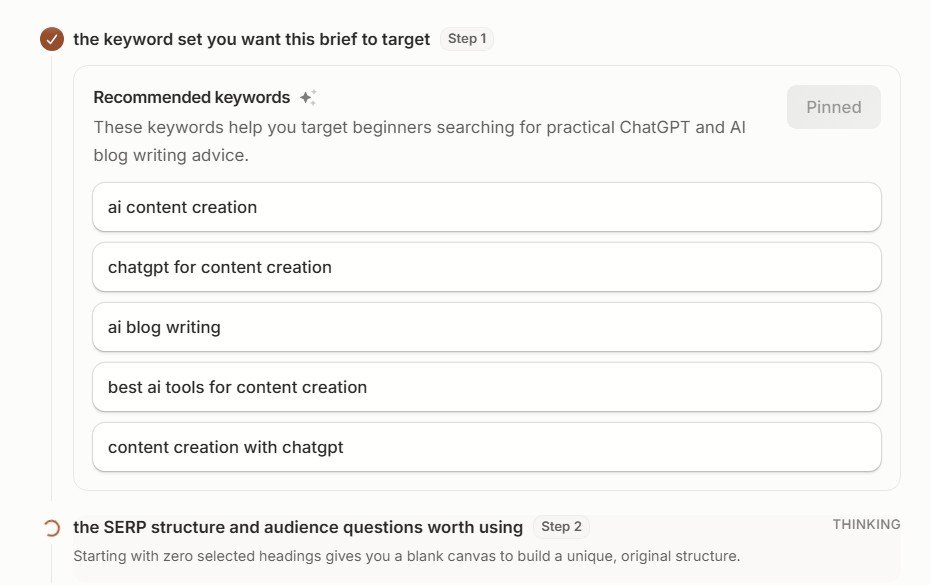
This is useful because it gives you a topic map before writing.
But I would not use every keyword automatically. Some terms may fit naturally. Others may belong in another article.
Frase Also Looks at SERP Structure
Keyword lists are only one part of SEO research.
Frase also showed us how competing pages were structured.
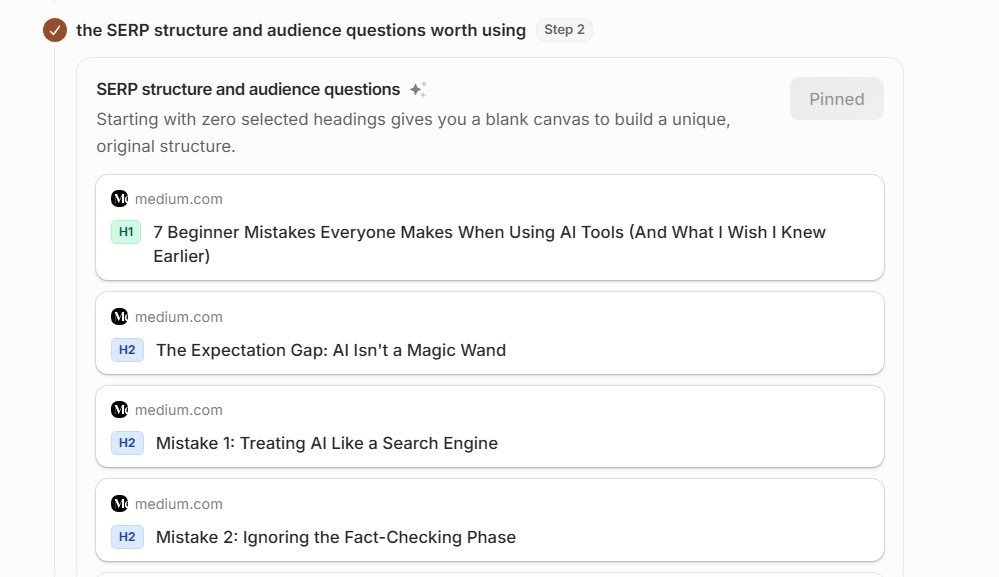
This can help you understand what readers may expect from the topic.
For example, if most top pages explain the same basic concept, you should probably cover it too. But that does not mean copying their outline.
A better use is:
- Find important topics competitors cover.
- Notice what is missing.
- Add your own examples, tests or screenshots.
- Build a better structure for your reader.
What Is Frase Content Score?
Content Score is one of the main numbers you see inside the Frase editor.
It gives you a quick view of how well the article matches Frase’s optimization checks.
In one of our tests, the score panel also showed useful article statistics:
- word count,
- number of headers,
- links,
- images.
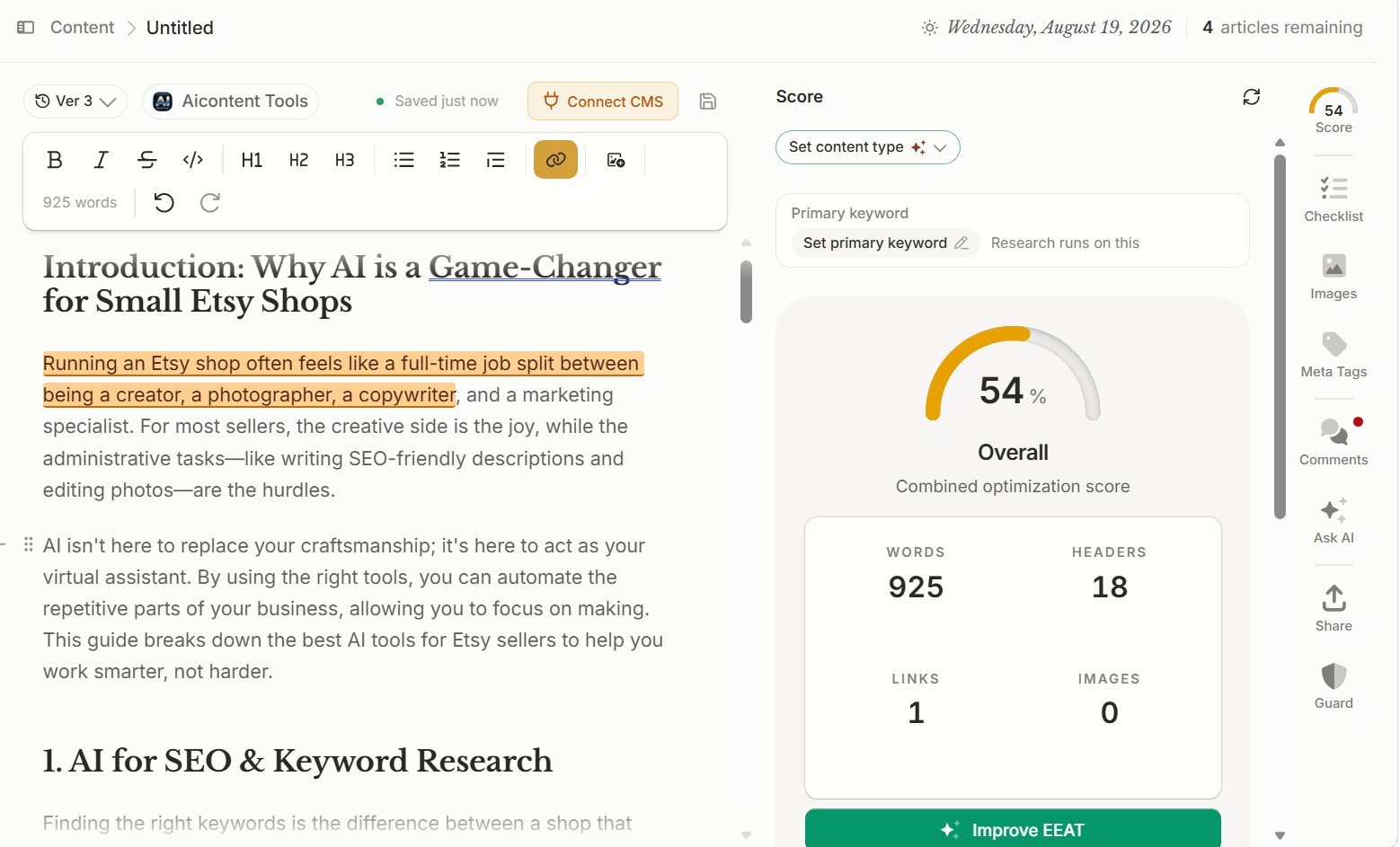
This is useful as a quick health check.
But the score becomes much more interesting when you compare it with other metrics.
100% Topic Coverage Did Not Mean a Perfect Score
This was one of the best findings from our test.
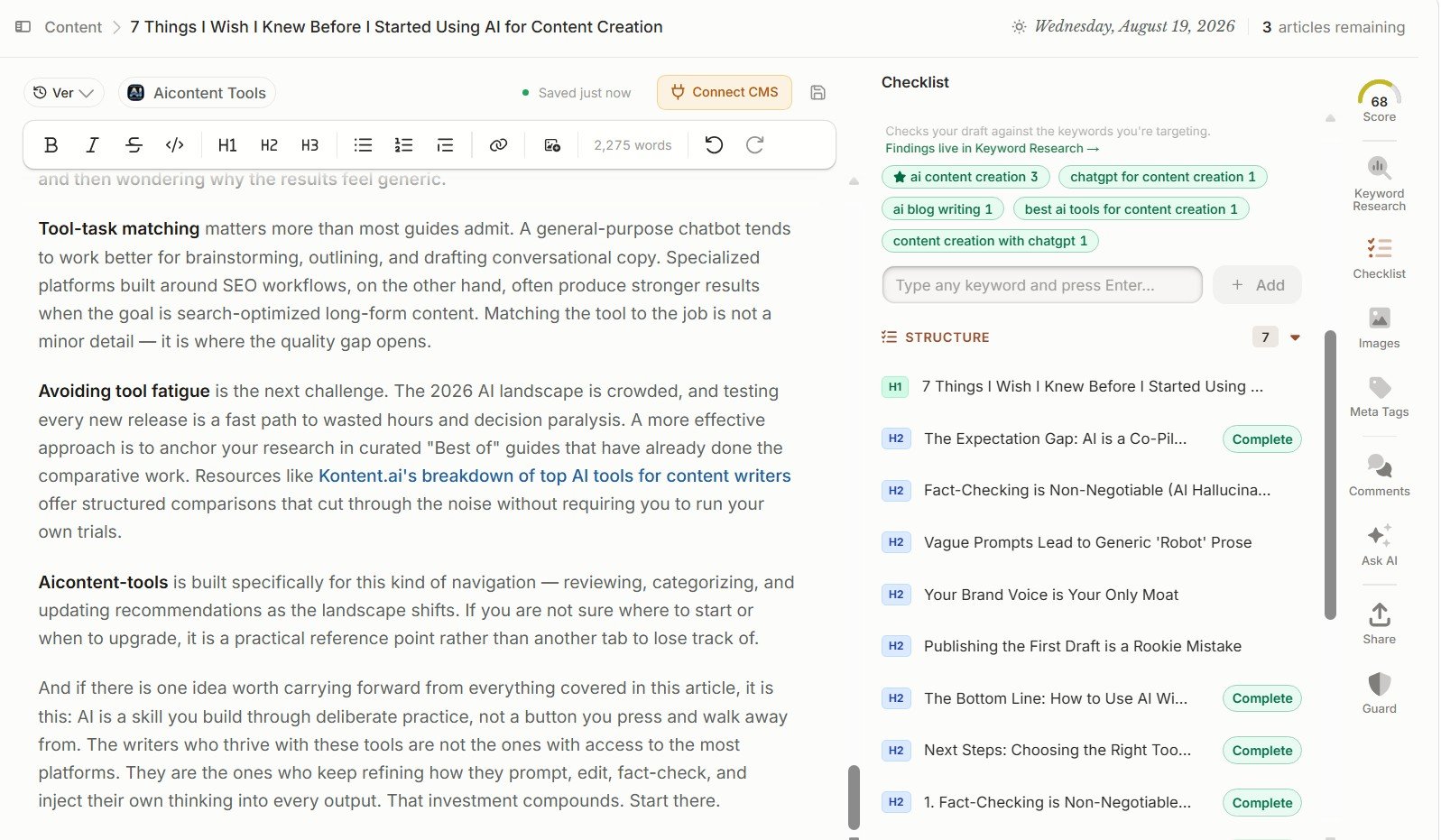
Frase generated a complete article with:
- 7 of 7 sections,
- 2,275 words,
- 100% Topic Coverage,
- 7 headers,
- 7 links.
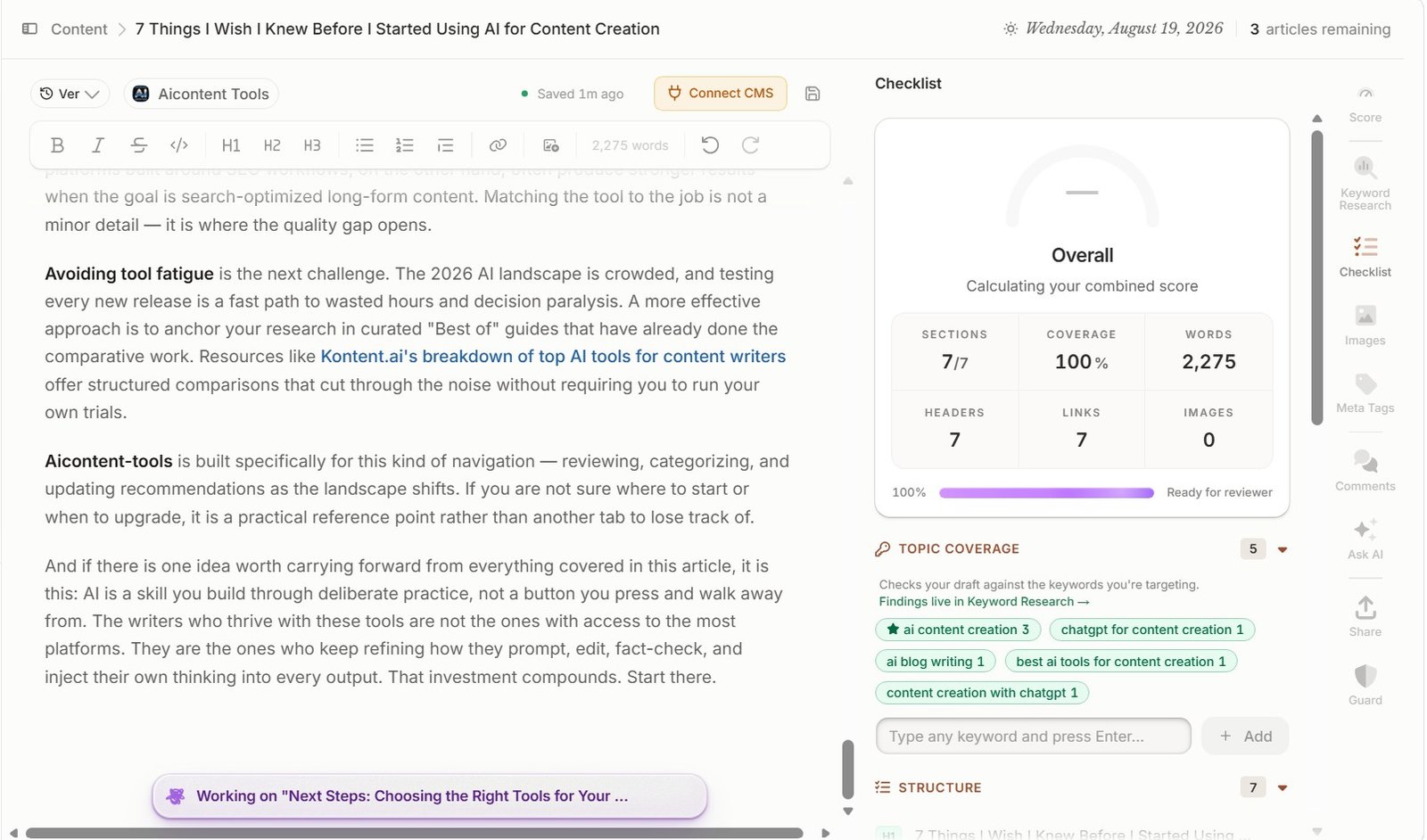
That sounds almost perfect.
But when we looked at the overall score, it was only 68.
Frase Checks Article Structure
The Content Checklist gives you a more detailed view of the page.
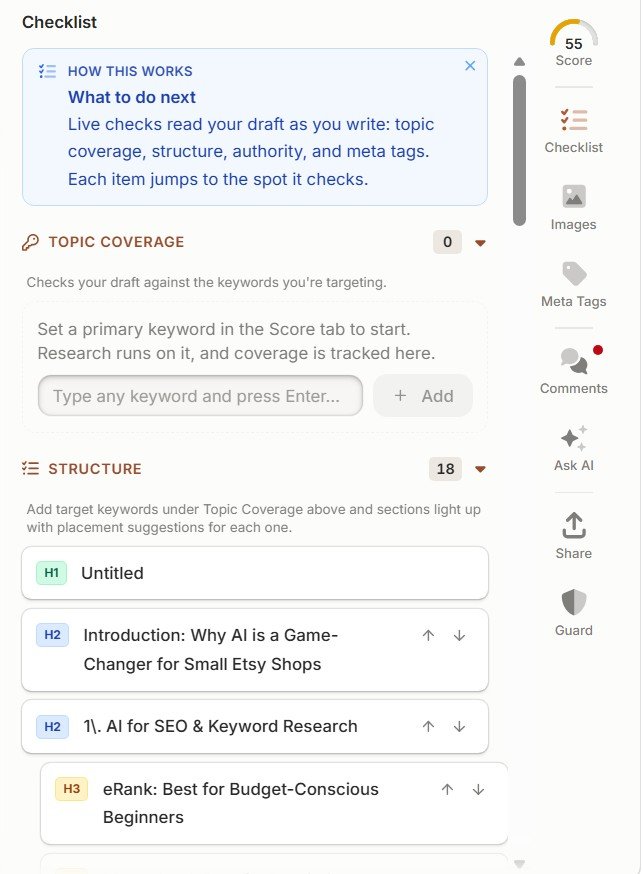
Structure matters because readers and search engines both need a page that is easy to follow.
Frase lets you review the heading hierarchy instead of only looking at the text as one long document.
I find this especially useful for long articles. A 2,000-word draft can look fine while you are writing it, but the heading structure may still be weak.
Authority Is Checked Separately
Frase also includes an Authority section.
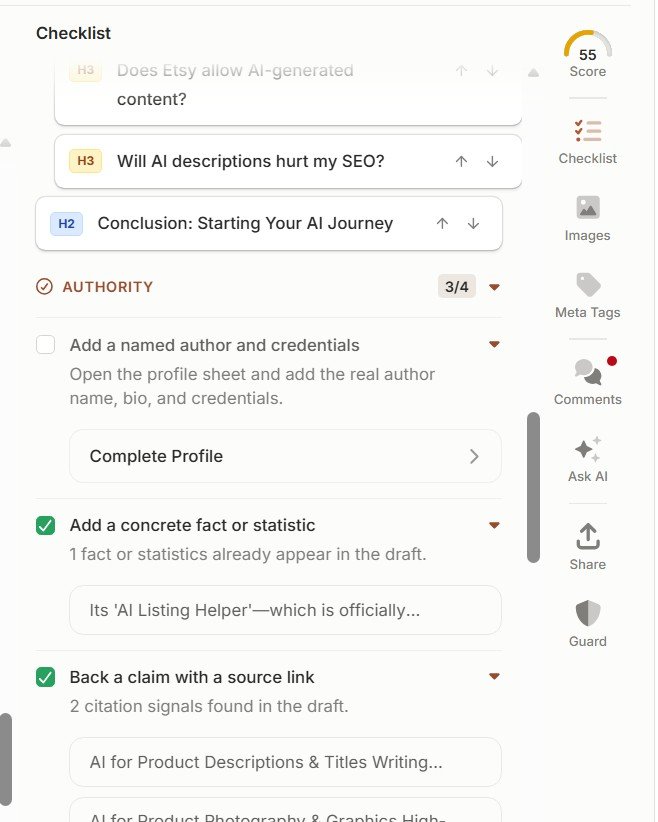
This is a useful addition.
SEO content is not only about repeating topics. Strong pages also need useful evidence and trust signals.
Frase checks things such as:
- author credentials,
- specific facts,
- statistics,
- supporting source links.
Frase Can Generate SEO Titles and Meta Descriptions
Frase also includes metadata tools.
Before optimization, the Meta Tags panel checks the SEO title, meta description, title length and target keyword.

We also tested the AI generation option.
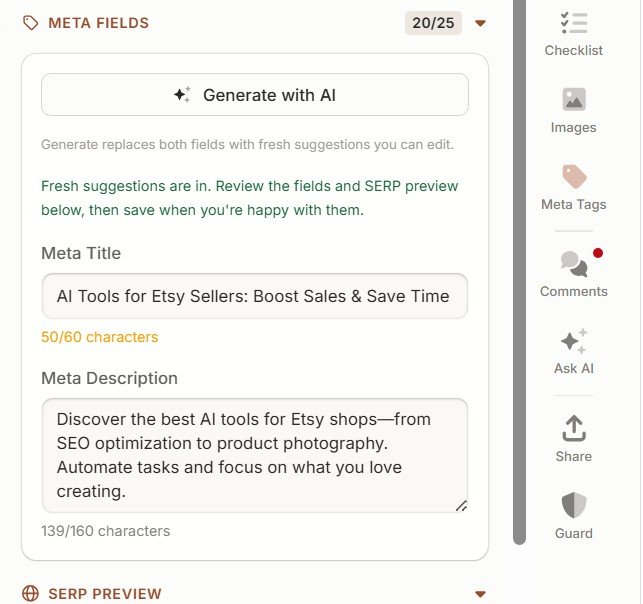
After that, Frase showed the SERP preview.
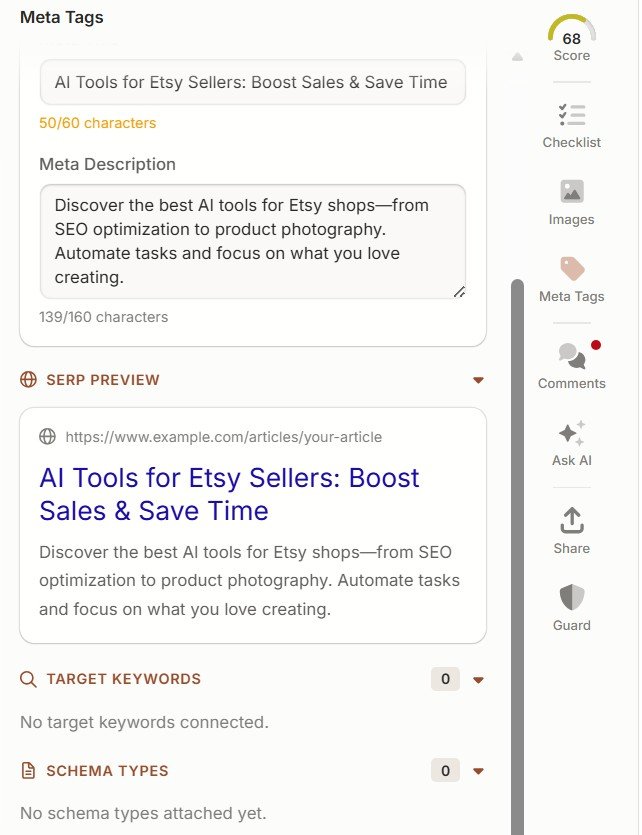
This saves time.
But I would still edit the generated title manually. A technically good title can still be boring.
Frase Shows a Full Optimization Summary
Frase can combine several checks into one summary view.

I like this view because it stops SEO from becoming only a keyword task.
You can see several areas at once:
- Topic Coverage,
- Structure,
- Authority,
- Meta Tags.
Frase Does More Than Count Keywords
This was one of my favorite SEO tests.
Frase looked at an individual section and gave us a placement recommendation.
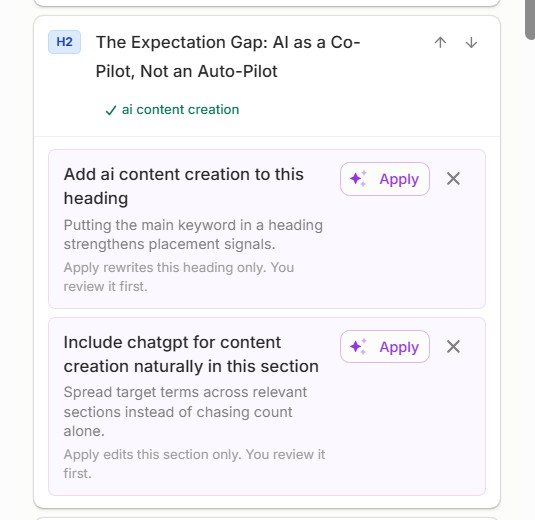
One recommendation was to add a keyword to an H2 heading.
Another was to use a related phrase naturally inside the section.
This is more useful than a message like:
“Use this keyword three more times.”
You Can Review the Rewrite Before Accepting It
Frase can also rewrite the heading for you.
Importantly, it does not have to replace the text silently.
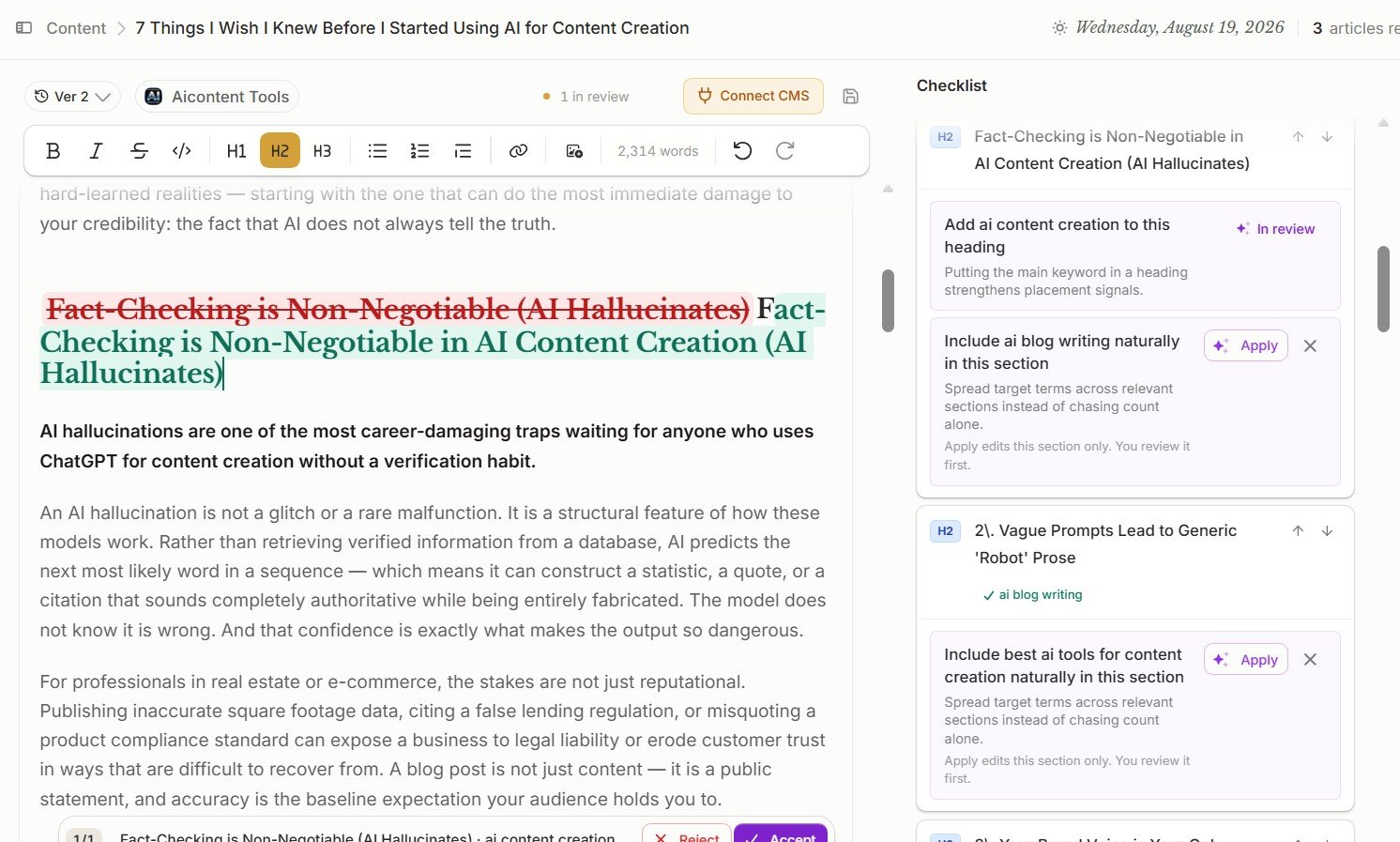
The old version was visible. The proposed version was visible too.
Then we could choose Accept or Reject.
That gives the user more control.
Frase SEO and GEO Are Connected
Frase now shows SEO beside other content signals.
In our full article test, the detailed score screen showed:
| Metric | Our result |
|---|---|
| Overall | 69 |
| EEAT | 38% |
| GEO | 84% |
| SEO | 84% |
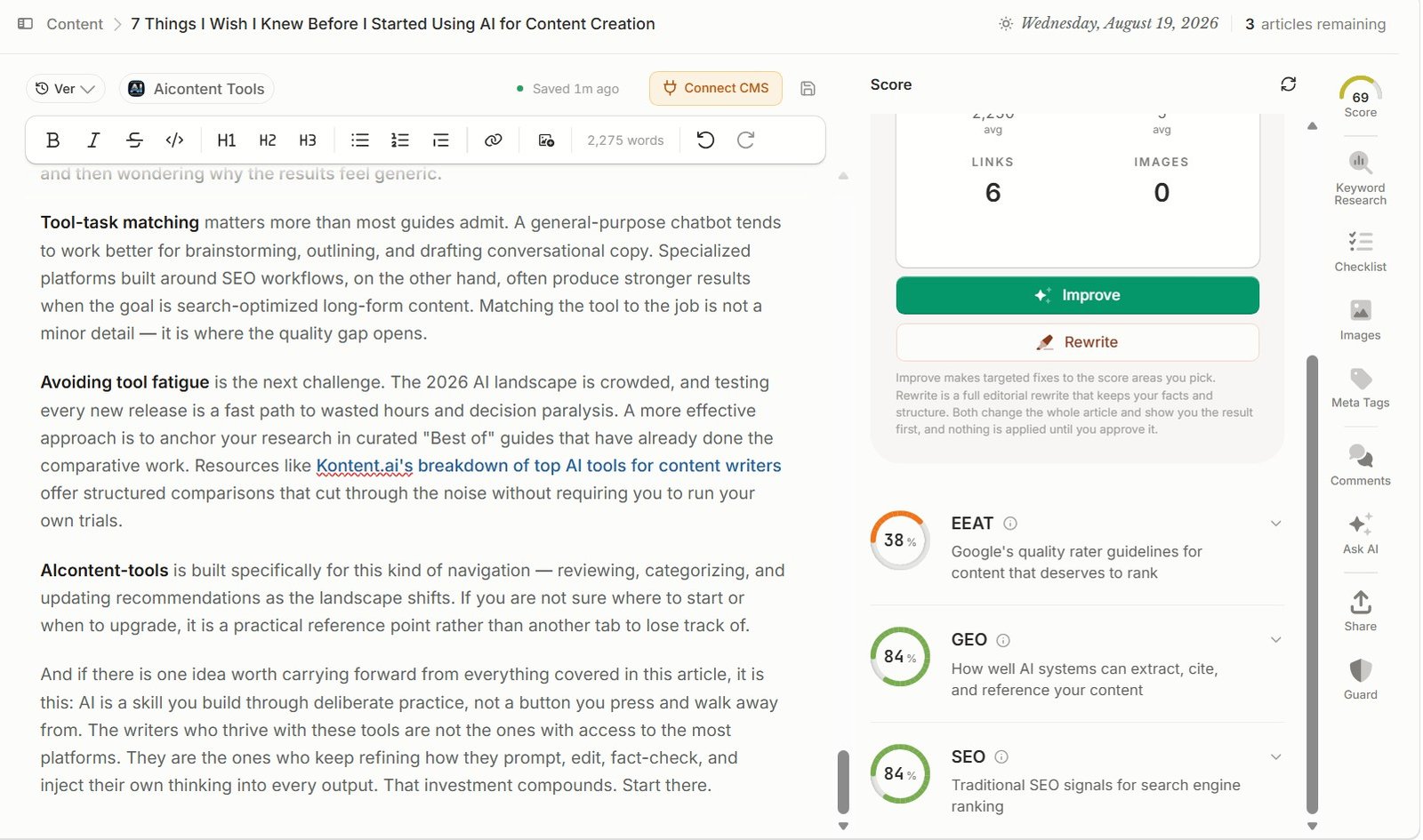
This is a good reminder that strong SEO signals do not automatically make a complete article.
You still need:
- real experience,
- useful examples,
- strong sources,
- clear explanations,
- human editing.
What Happened After Frase Improve?
We also tested the Improve workflow.
After AI changes, the article grew from 2,275 to 2,311 words. The Content Score reached 70.
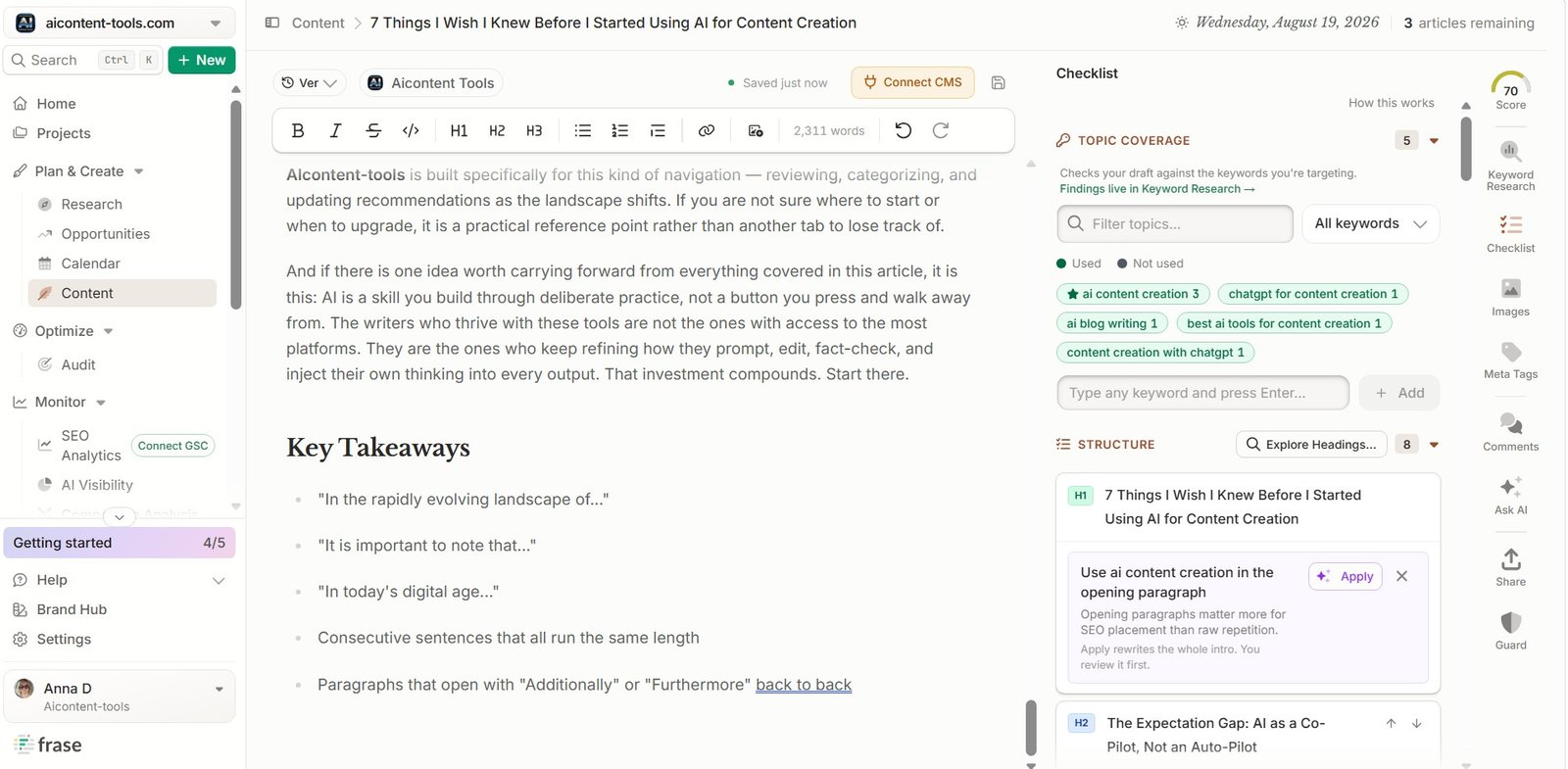
The score moved up, but only slightly.
That is another reason not to expect one AI button to solve every SEO problem.
Frase SEO vs Site Audit
These features sound similar, but they solve different jobs.
| Frase SEO Optimization | Frase Site Audit | |
|---|---|---|
| Main focus | One article | Many pages across a site |
| Best for | Improving a draft | Finding pages that need work |
| Keywords | Detailed section-level optimization | Part of a wider audit |
| AI fixes | Content rewrites and optimization suggestions | Fixes for detected page issues |
What I Like About Frase SEO Optimization
1. It Gives More Than One SEO Signal
Topic Coverage, structure, authority and metadata are separated. That makes the feedback easier to understand.
2. SERP Research Is Connected to Writing
You can research competitor headings and then move directly into the content workflow.
3. Keyword Placement Is More Specific
Frase can suggest where a phrase may fit, not only tell you that the count is low.
4. You Can Review AI Changes
The Accept and Reject workflow gives you control before a rewrite becomes part of the article.
5. Metadata Tools Save Time
Generating a first title and meta description inside the same editor is convenient.
What I Do Not Like
1. The Score Can Become a Distraction
It is easy to start writing for the number instead of the reader.
I would never make an awkward sentence only to increase Content Score.
2. 100% Coverage Can Look Better Than It Really Is
Our test showed this clearly.
We had 100% Topic Coverage but only a 68 overall score. One strong metric did not mean the page was finished.
3. AI Suggestions Still Need Editing
Frase can suggest useful changes, but it does not know your site as well as you do.
Always check meaning, tone and reader value.
Who Is Frase SEO Best For?
Good fit
- SEO writers,
- bloggers,
- content teams,
- agencies,
- sites publishing long-form content,
- people updating existing articles.
Probably too much if
- you only want a simple AI writer,
- you rarely publish content,
- you do not want to study SEO feedback,
- you only need basic keyword ideas.
How I Would Use Frase SEO
I would keep the process simple.
- Research the topic. Review keywords and SERP structure.
- Build the outline. Cover the important topic, but add something original.
- Write or generate the draft. Do not optimize every sentence while writing.
- Check Topic Coverage. Look for missing concepts.
- Review structure. Check H1, H2 and H3 organization.
- Review Authority. Add useful evidence and real sources.
- Check keyword placement. Use important terms naturally.
- Create metadata. Generate a first version, then edit it.
- Review the full score. Do not chase one metric.
- Edit for humans. Read the article again without looking at the score.
Want to Test Frase SEO on Your Own Article?
Use one real article, not a demo topic. Check the keywords, structure and metadata, then compare Frase’s recommendations with what you would change manually.
Try FraseAffiliate disclosure: the Frase link above is an affiliate link. I may earn a commission if you purchase through it, at no extra cost to you.
Continue With Our Frase Tests
This SEO review focuses on classic content optimization. We tested the other Frase modules separately so you can go deeper without reading one huge article.
Frase Improve Content Review →
Frase SEO Optimization Review: Final Verdict
Frase SEO optimization is strongest when you use it as an editor, not as a score game.
The platform helps you look at the article from several angles:
- keywords,
- topic coverage,
- SERP structure,
- headings,
- authority,
- metadata,
- keyword placement.
Our test also showed why that broader view matters.
The article reached 100% Topic Coverage, but its overall Content Score was only 68. Later, the detailed panel showed SEO 84%, GEO 84% and EEAT only 38%.
Those numbers told different stories about the same article.
Frase SEO Optimization FAQ
What is Frase Content Score?
Content Score is a general optimization metric inside the Frase editor. It gives you a quick view of how well the article matches Frase’s content recommendations.
What is Topic Coverage in Frase?
Topic Coverage shows how well the draft covers the target topics Frase is tracking. In our test, the article reached 100% Topic Coverage.
Does 100% Topic Coverage mean the article is fully optimized?
No. Our test reached 100% Topic Coverage while the overall Content Score was only 68. Other areas still needed improvement.
Does Frase analyze competitors?
Yes. We used SERP research that showed competitor headings and article structure.
Can Frase suggest keywords for headings?
Yes. In our test, Frase recommended adding a target keyword to an H2 and using another phrase naturally inside the section.
Can I review an SEO rewrite before applying it?
Yes. We tested a heading rewrite where Frase showed the old and new versions and gave us Accept and Reject controls.
Can Frase generate meta titles and descriptions?
Yes. We generated both during our test and then reviewed the SERP Preview.
Does Frase check authority and sources?
The Authority checklist we tested included author information, facts, statistics and source links.
Is Frase SEO the same as Frase GEO?
No. They are connected but different. SEO focuses more on traditional search optimization. GEO looks at content signals related to AI-generated search and citations.
Where can I learn how to use Frase step by step?
Read our Frase Tutorial for the full workflow from project setup to optimization.