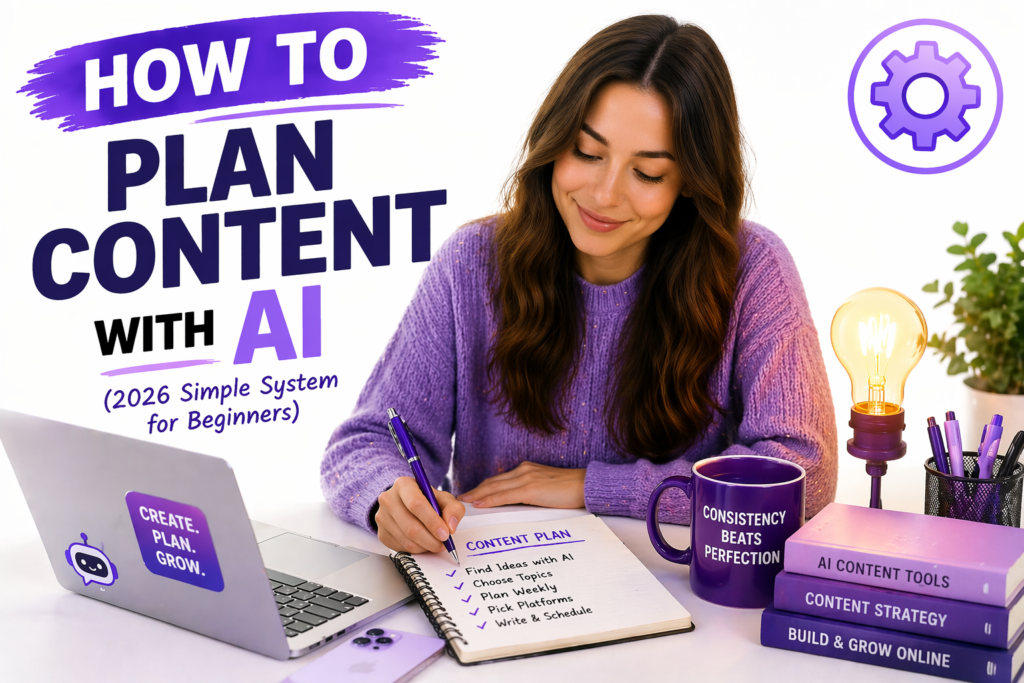
How to Plan Content with AI Without Feeling Overwhelmed
Stop staring at a blank page wondering what to post next. A simple AI planning system can help you map out content faster and stay consistent.
You sit down to plan your content.
You open a notebook, a Google Doc, maybe even three tabs.
And then… nothing.
No clear ideas. No structure. No plan you can really follow.
That feeling is very common.
I have felt it too when testing AI for content workflows. The hard part was not always writing. Very often, it was planning.
Too many ideas one day. No ideas the next day. And always that small stress in the back of your mind:
“What should I post now?”
This happens to beginners all the time.
A student may want to grow a blog after classes, but has only one hour in the evening. A freelancer may want to post on LinkedIn, but client work takes all the energy. A small business owner may know content matters, but still feels lost every Monday morning.
That is why content planning matters.
When you have a simple plan, content feels lighter. You stop guessing. You stop wasting time. And with AI, this becomes much easier.
In this guide, I will show you how to plan content with AI step by step. You will learn how to find ideas, organize them, build a weekly system, and turn one plan into real posts you can actually publish.
Best AI Writing Tools in 2026 →
Why content planning feels so hard
Many beginners think they have a writing problem.
But often, they have a planning problem.
They may know their topic. They may even enjoy writing. But they do not know:
- what to post first
- how often to post
- how to connect topics
- how to avoid repeating themselves
- how to stay consistent
That leads to random posting.
And random posting usually creates random results.
On days when I plan well, writing feels easier. On days when I skip planning, even short posts feel heavy. AI helps, but only when you give it a simple system to follow.
What content planning means
Content planning means deciding in advance:
- what you will create
- who it is for
- where you will post it
- when you will publish it
- how each piece connects to your bigger goal
This is important because content should not feel like a daily emergency.
A good content plan helps you move from:
“What should I post today?”
to:
“I already know my next 5 posts.”
Step 1: Start with one main goal
Before you ask AI for ideas, decide what your content should do.
This sounds basic, but it is one of the biggest planning mistakes.
Ask yourself: do you want to:
- get blog traffic
- grow on Pinterest
- build trust on LinkedIn
- get leads for your service
- sell products
- grow your email list
Choose one main goal first.
Main goal: traffic from Google.
Main goal: LinkedIn visibility and leads.
Main goal: Pinterest traffic and better product visibility.
Step 2: Choose 3 to 5 core topics
Now decide what you want to be known for.
You do not need 20 topics. You need a few strong ones.
For a site about AI content tools, core topics could be:
- AI writing
- content planning
- social media content
- Etsy content
- AI tools for work
For a career content site, core topics could be:
- resumes
- job search
- interviews
- productivity
This helps AI give better ideas later.
Without clear topics, AI often gives broad ideas that sound okay but do not build authority. Authority means people start to see you as helpful in one area.
Best AI Tools by Profession (2026 Guide) →
Step 3: Ask AI for content ideas the smart way
This is where many people waste time.
They ask AI:
“Give me content ideas.”
That is too broad.
Instead, ask with context.
Give me 20 beginner-friendly content ideas for a blog about AI writing tools. Include blog post ideas, Pinterest-friendly ideas, and social media topics.
Give me 15 content ideas for Etsy sellers who want more traffic and better listings. Keep the topics practical and easy to understand.
Good prompts include:
- niche
- audience
- content type
- skill level
- expected result
Step 4: Group your ideas by purpose
Not every post should do the same job.
Some posts are for traffic. Some are for trust. Some are for engagement. Some are for conversion.
SEO blog posts, Pinterest-friendly topics, tutorials, guides.
Case studies, personal lessons, honest reviews, mistakes learned.
Questions, short tips, relatable posts, mini stories.
Tool comparisons, service offers, action-based posts, educational ads.
Example for blogging with AI:
- Traffic: How to Start a Blog with AI
- Trust: What I Learned After Testing AI for Blog Writing
- Engagement: 3 Blog Mistakes Beginners Make with AI
- Conversion: Best AI Tools for Bloggers in 2026
Step 5: Build one weekly plan, not a 3-month fantasy plan
Beginners often plan too much.
They create huge calendars, colorful boards, and complicated systems.
Then they stop after five days.
A simple weekly plan works much better.
One main blog post or guide.
One Pinterest pin and one short tip.
One Instagram caption or short post.
One LinkedIn post.
One extra pin or one update.
This is already enough.
A simple plan you follow is always better than a big plan you quit.
Step 6: Turn one main topic into multiple content pieces
This is one of the best ways to make content planning easier.
Instead of planning from zero every day, plan around one main topic.
Main topic example:
From that one topic, you can create:
- blog post
- Pinterest pin 1
- Pinterest pin 2
- Instagram caption
- LinkedIn lesson post
- short Facebook tip
How to Turn One Piece of Content into 10 Posts with AI →
Step 7: Match the right format to the right platform
A long explanation may work on a blog, but not in an Instagram caption.
A short emotional line may work on Pinterest, but not as a full guide.
One idea, four formats:
- Blog: How to Plan Content with AI
- Pinterest: Content Planning Feels Hard? Try This AI System
- Instagram: If planning content takes too much time, start with one weekly theme.
- LinkedIn: I used to lose time every week trying to plan content from zero. This simple AI system changed that.
Step 8: Use AI to create a real content calendar
Now put your plan into a simple calendar.
Create a 7-day content calendar for a beginner blog about AI writing tools. Include one blog post, two Pinterest posts, one Instagram caption, and one LinkedIn post.
Create a simple weekly content plan for an Etsy seller who wants traffic from Pinterest and blog SEO.
AI should create the first draft of the calendar, not the final truth.
Sometimes it gives you too much. Sometimes the order is not practical. You still need to look at your real time and energy.
If Wednesday is always your busiest day, do not schedule your hardest task there. A content plan must fit your real life.
Step 9: Keep a low-energy backup plan
Not every day is a strong day.
Some days you are tired. Busy. Distracted. Stressed.
That is why I like to keep backup content ideas ready.
Low-energy posts can be:
- one quick tip
- one quote with a short lesson
- one mini caption
- one small Pinterest idea
- one short list post
Give me 10 low-effort content ideas for busy beginners in [niche].
Step 10: Review results and improve the plan
A plan is not meant to stay frozen forever.
At the end of the week, ask:
- Which content got the most clicks?
- Which post got the best engagement?
- Which topic felt easiest to create?
- Which format felt too hard?
- Which platform gave the best return?
Maybe Pinterest brings more traffic than expected. Good. Next week, create one extra pin.
Maybe LinkedIn gets views but takes too long. Then simplify the format.
Maybe blog posts perform better than Instagram. Then focus more on blog and Pinterest first.
Simple beginner content plan example
Main topic: Instagram Captions with AI
Common mistakes beginners make
1. Planning too much
A giant plan often looks good but feels impossible to follow.
2. Asking AI vague questions
Vague prompts create weak ideas.
3. Using random topics
This makes your content feel disconnected.
4. Ignoring real life
A content plan must fit your real energy and time.
5. Posting with no goal
Then it is hard to know what success looks like.
6. Starting over every week
You do not need a new system every Monday. You need a better one you can repeat.
FAQ
Yes. AI is very helpful for beginners because it removes blank-page stress and gives structure much faster.
Learn AI basics →No. A simple document, spreadsheet, or notes app is enough when you are starting.
Start small. One main topic per week is often enough for beginners to stay consistent and improve quality.
Learn how to turn content into traffic →This usually means your prompt is too broad. Add your niche, audience, platform, and goal.
See better prompt examples →No. Start with 2–3 platforms that match your audience and your available time.
Learn Pinterest strategy →The biggest mistake is trying to do too much too fast. A simple plan you can follow is stronger than a big plan you abandon.
Final thoughts
Content planning does not need to feel heavy.
It should help you, not stress you.
With AI, the planning part becomes easier because you can find ideas faster, group them better, and build a simple system around them.
But the real win is not only speed.
The real win is clarity.
- Pick one goal.
- Choose 3 to 5 core topics.
- Ask AI for ideas.
- Build one weekly plan.
- Review what works.
That is enough to begin.