AI can write text in many styles — but most people use it in a very basic way.
In this guide, you will learn how to control tone, style, and voice using AI tools, with real examples and simple prompts.
Most AI content sounds the same — safe, neutral, and forgettable.
But what if you could make AI write in styles it was never trained for?
From noir detective tutorials to poetic travel guides, ultra-niche AI writing styles can instantly make your content stand out.
In this step-by-step guide, you’ll learn exactly how to train AI to write in unique voices that grab attention and boost engagement.

Why Niche Writing Styles Matter
Most AI content on the internet sounds the same. Safe. Neutral. Predictable.
When you use experimental styles, you get:
✅ Higher engagement
✅ More shares on social media
✅ Strong brand voice
✅ Content that feels human
✅ Less competition in SEO
Why Style Prompts Matter
See example with instruction how to make a coffe.
Version1 – simple prompt – Neutral AI Output
To make a simple cup of coffee, heat fresh water to just below boiling (about 195–205°F), measure 1–2 tablespoons of ground coffee per 6 ounces of water, and place the grounds in your brewer (drip machine, pour-over, or French press). Slowly pour the hot water over the grounds, let it brew for about 3–4 minutes (longer for French press), then remove the filter or press the plunger. Pour into a mug and add milk or sweetener if you like. Enjoy.
Version2 – Funny Story Tone:
In a tiny kitchen kingdom, a brave kettle dragon (almost boiling — about 195–205°F) wakes up to splash into a bowl of dramatic coffee grounds (roughly 1–2 tablespoons per 6 ounces). You fling the grounds into your trusty brewer — drip, pour-over, or the noble French press — then pour the hot water like a gentle rain so the grounds can gossip and brew for 3–4 minutes (the French press likes a longer story). When the brewing gossip is finished, press the plunger or lift the filter, pour the steaming potion into a mug, crown it with milk or a sprinkle of sweet unicorn dust, and sip while declaring yourself ruler of the morning.
Version3 – Silly Joke Tone:
Tiny kitchen. Brave kettle dragon. Almost boiling. Hot enough to singe a sock.
You toss 1–2 tablespoons of grumpy coffee grounds into your fancy water trap — drip, pour-over, or French press (French press likes long gossip).
Dragon water goes sploosh on the grounds. They chat, stew, gossip for 3–4 minutes. French press? Longer stories, of course.
Press, lift, pour. Mug now full of magical bean juice. Add milk or sprinkle of unicorn dust.
Sip. Declare: “I am the boss of mornings. Bow before caffeine!”
Step 1: Define Your Ultra-Niche Style Clearly
AI cannot guess your style. You must describe it very clearly.
Bad prompt:
Write a funny recipe.
Better prompt:
Write cooking instructions in a playful, slightly sarcastic tone, like a tired chef talking to beginners.
The more specific you are, the better the result.
Style Elements You Should Define
Tell AI about:
- Tone (funny, dark, poetic)
- Audience (kids, beginners, experts)
- Format (steps, story, guide)
- Voice (first person, narrator, character)
- Inspiration (retro ads, fairy tales, etc.)
Step 2: Feed AI With Style Examples
AI learns best from patterns.
Before asking for full content, give it mini examples of the style you want.
Example: Training AI for Funny Cooking Instructions
Prompt training:
Here is the style example:
“Step 1: Look at the onion and apologize in advance.”
Learn this tone. Now write pancake instructions in the same style.
✅ Result: much more consistent humor
❌ Without example: generic jokes
Step 3: Use the “Style Stack” Method
This is a powerful trick used by advanced AI writers.
Instead of one style… combine 2–3 styles together.
Formula:
Base format + Tone + Creative twist
Example 1: Humorous Cooking Instructions
Prompt:
Write spaghetti cooking instructions in the style of a dramatic movie trailer narrator.
AI output (example):
In a world… where pasta waits in silence…
One pot will rise to the challenge.
Step 1: Boil water like your reputation depends on it.
🔥 This is unique content that stands out immediately.
Example 2: Poetic Travel Guide
Prompt:
Write a short travel guide to Paris in soft poetic style, simple language, calm mood.
AI output (example):
Paris wakes slowly, like a cat in the sun.
Walk near the river in the morning.
Buy warm bread. Do not hurry.
The city likes patient visitors.
This type of content works great for:
- social media
- brand storytelling
Example 3: Retro Advertisement Style
Prompt:
Write a product description for an AI writing tool in 1950s retro advertisement voice.
AI output (example):
Say goodbye to slow typing, friend!
The future of writing has arrived — fast, shiny, and smarter than your office typewriter!
Perfect for:
- landing pages
- email marketing
- fun blog sections
Step 4: Lock the Voice With Constraints
AI sometimes “forgets” the style. To fix this, add constraints.
Useful Control Phrases
Add lines like:
- “Stay in this tone the whole time.”
- “Do not switch to normal blog style.”
- “Keep sentences short and playful.”
- “Avoid formal language.”
These small instructions make a big difference.
Step 5: Create a Reusable Style Prompt Template
Smart creators do not start from zero every time.
Build your own style template.
Copy-Paste Template
You can use this on aicontent-tools.com:
TASK: Write about [topic].
STYLE: [describe tone + inspiration].
FORMAT: [list, story, guide].
VOICE RULES:
– Keep sentences short
– Stay consistent
– Avoid generic phrases
SPECIAL TWIST: [your creative element]
Save this and reuse it for many articles.
7 Experimental Style Ideas You Can Try Today
Here are niche angles that still have low competition.
1. AI as a Tired Expert
Example prompt:
Explain SEO basics like a tired expert who has seen too many mistakes.
2. Fairy-Tale Tech Reviews
Example:
Review an AI tool like a magical fairy telling a story.
Great for:
- unique affiliate content
- brand personality
3. Noir Detective Tutorials
Example:
Explain keyword research in the voice of a noir detective.
Sample tone:
The keyword sat there… quiet… hiding traffic like a guilty suspect.
4. Minimal Zen Instructions
Example:
Explain prompt writing in calm zen style. Very short sentences.
Works very well on Pinterest.
5. Over-Dramatic Microcopy
Example:
Write a login error message in epic dramatic tone.
Fun and very shareable.
6. AI Writes Like a Friendly Robot
Example:
Explain blogging tips like a polite robot learning human emotions.
7. Retro Tech Magazine Voice
Perfect for AI tool reviews and comparisons.
Common Mistakes to Avoid
Even good creators make these errors.
❌ Too vague style description
❌ No example provided
❌ Mixing too many styles
❌ Prompts too short
❌ No tone constraints
Fix: Be specific, structured, and intentional.
Pro Tip: Test Styles Across Different AI Tools
Not all AI writers handle creative styles equally well.
After learning how to shape prompts, the best next step is simple:
👉 Try your experimental styles in different AI writing tools and compare the results.
Some tools are better at:
- humor
- storytelling
- brand voice
- structured creativity
Curious which AI writers perform best in 2026?
👉 View Best AI Writing Tools in 2026 and start testing your new creative prompts in real tools.
Final Thoughts
Most people use AI in the safest, most boring way.
But the creators who win in the next wave of content will be those who teach AI new voices.
Start small. Test weird styles. Save what works.
Because the future of AI writing is not just faster content…
…it is more creative content. 🚀
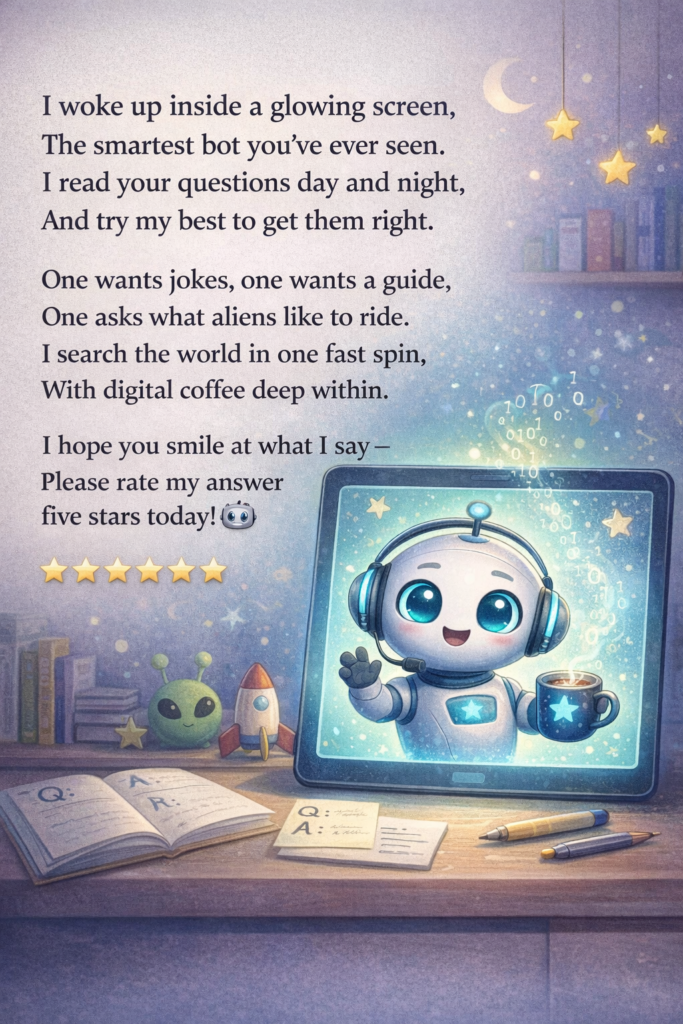
I woke up inside a glowing screen,
The smartest bot you’ve ever seen.
I read your questions day and night,
And try my best to get them right.
One wants jokes, one wants a guide,
One asks what aliens like to ride.
I search the world in one fast spin,
With digital coffee deep within.
I hope you smile at what I say—
Please rate my answer five stars today! 🤖
Do you like the AI poem? Check the ranking of all the tools and start experimenting with different styles in your chosen AI.
View Best AI Writing Tools in 2026

FAQ: Writing in Unique AI Styles
❓ Can AI really write in new styles?
A: Yes! AI can try new styles if you give clear instructions. Show it the tone, the way you want it to sound, and some examples. The more details, the better.
❓How do I make AI keep the same tone?
A: Tell AI the tone and style at the start. Use short rules like “stay funny” or “don’t use normal blog style.” Give examples. This keeps it on track.
❓Do special styles help with SEO?
A: Yes, a little! Fun and interesting content can make people stay longer on your page and share it. Google likes that. Also, niche styles are unique, so less competition.
❓ How can I try styles without breaking my content?
A: Start small. Test short prompts first. Check the output. Save the ones that work. Don’t mix too many styles at once.
❓ Which AI tools are good for creative styles?
A: Different tools do different things:
- Some are better at funny or story style
- Some are better at brand voice or clear instructions
- Test a few to see which one works best for you
❓Can I mix styles in one prompt?
A: Yes, but only 2–3 styles. Too many can confuse AI. Stick to a small mix first, then grow your experiment.
❓Can I use this for social media posts?
A: Absolutely! Pinterest, Instagram, or even emails work well. Unique AI styles grab attention and make your content fun to read.