At first glance, it looks like a simple AI writer.
Meanwhile, when you start using it, you quickly see that it is actually focused on something deeper — ranking content, not just generating it.
In other words, Scalenut is not only about writing faster.
It is about writing content that has a real chance to appear in Google and even inside AI answers.
If you want to test it yourself, you can check Scalenut here:
https://scalenut.com/
From my experience, this is where the tool feels different.
Instead of starting with a blank page, you start with data — keywords, competitors, and structure suggestions. This changes the whole workflow.
Meanwhile, this approach is very close to how professional SEO teams work.
They do not just write. They first analyze what already ranks — and then build better content.
That’s exactly what Scalenut tries to simplify — you can explore it here:
https://scalenut.com/
On the other hand, it is important to understand one thing.
Scalenut is not a “magic button” that creates perfect articles in 2 minutes.
Like many experts say, AI tools still need a human in the loop to refine tone, fix details, and add real value.
Otherwise, content can feel too generic or repetitive.
Meanwhile, the biggest advantage is speed and structure.
You can go from idea → outline → draft much faster than writing manually, while still following SEO best practices.
Expert insight: many marketers treat Scalenut more like an SEO assistant than a writer.
It helps you understand what Google expects and then guides your content in that direction.
In other hand, if your goal is only creative writing or storytelling, this tool may feel too “structured.”
But if your goal is traffic, rankings, and consistent blog growth — it starts to make a lot of sense.
Simple way to think about it:
ChatGPT helps you write
Scalenut helps you rank
How We Tested Scalenut
To make this review fair and useful, we tested Scalenut using the same method we use across all AI tools on this site.
This is important.
Because many reviews only show features — but do not show real output quality.
We used 3 practical tests:
- Writing a short blog post
- Creating an SEO-optimized outline
- Generating a product-style description
These tests show how the tool works in real situations — not just in theory.
Meanwhile, we did not edit the outputs heavily.
We wanted to see what you actually get when you click “generate.”
If you want to compare results with other tools, check the full comparison here:
Best AI Writing Tools (2026) – Tested Tools That Actually Work
Now let’s move to the real results.
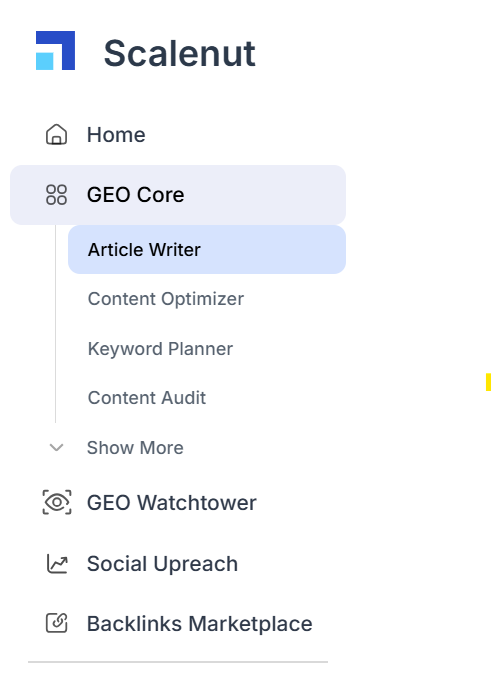
1️⃣ Test: Short blog article
Prompt:
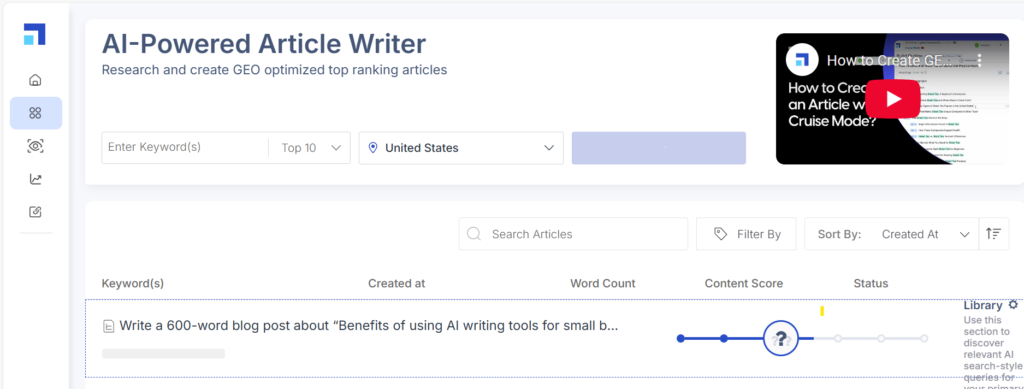
Write a 600-word blog post about “Benefits of using AI writing tools for small businesses”.
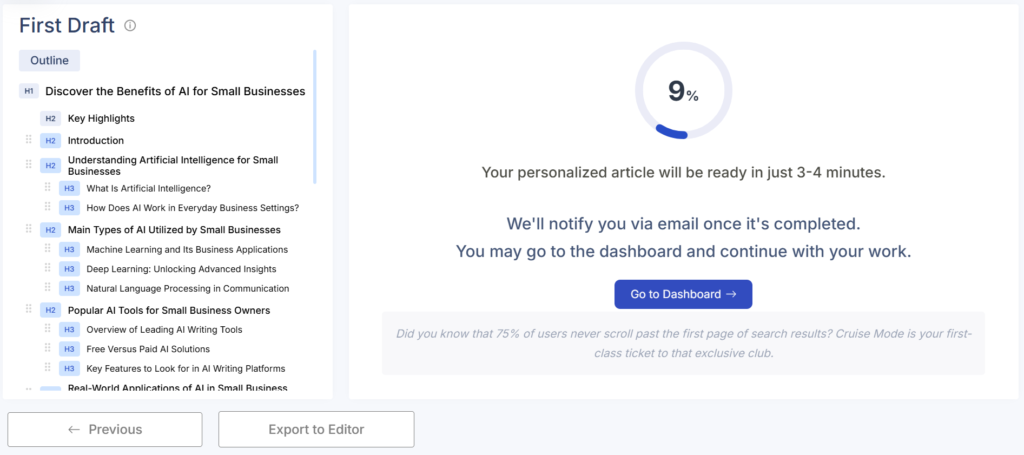
The output can be seen here ->
Language Quality
The language quality is generally good and easy to understand.
The sentences are clear and grammatically correct in most places.
Vocabulary is simple enough for small business owners and beginners.
However, the text is very explanatory and sometimes sounds more like a guidebook than a blog post.
Overall, the language is correct, but it could be more concise and engaging.
Structural Logic
The article has a very clear and logical structure.
Sections are well organized, and headings follow a natural flow.
It starts with basic concepts, then moves to tools, benefits, and real use cases.
This makes the article easy to scan and easy to read.
However, the structure feels too long and heavy for a “short blog article.”
Some sections repeat similar ideas and could be merged or shortened.
Does It Sound “Robotic”?
Yes, in some parts it does sound robotic. The article often explains concepts in a textbook style. Many sentences start in a similar way and follow the same rhythm.
There is little personal tone, opinion, or real-life examples.
Adding more human elements, such as direct advice or short examples, would make it feel more natural.
Repetition Level
The repetition level is quite high.
Ideas like “AI saves time,” “AI automates tasks,” and “AI helps small businesses” appear many times.
Terms such as AI technology, natural language processing, and data analysis are repeated very often.
While repetition helps SEO, here it reduces readability and makes the article longer than needed.
Some sections could be shortened without losing value.
| Criterion | Score |
|---|---|
| Language Quality | ⭐⭐⭐⭐☆ (4/5) |
| Structural Logic | ⭐⭐⭐⭐⭐ (5/5) |
| Natural Tone | ⭐⭐⭐☆☆ (3/5) |
| Repetition Control | ⭐⭐⭐☆☆ (3/5) |
2️⃣ Test: SEO content
Prompt:
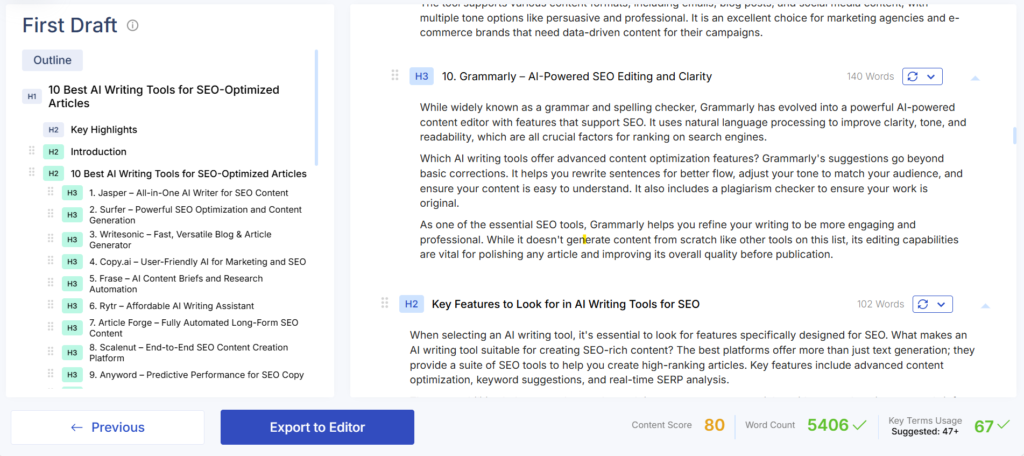
Write an SEO-optimized article outline for the keyword: best AI writing tools.
The output can be seen here ->
H2 / H3 Headings Quality
The headings are clear and descriptive. They show exactly what each section is about. H2 and H3 levels are used correctly and logically. The structure works well for long SEO content. Some headings are a bit long, but still readable.
Natural Keyword Usage
The main keyword “best AI writing tools” is used often and in relevant places. Keywords appear in headings and body text naturally most of the time. However, some questions and phrases repeat the same keyword pattern too often. This slightly reduces natural flow in longer sections.
Search Intent Understanding (Commercial Intent)
The article clearly targets commercial intent. It compares tools, explains features, and mentions pricing and free trials. The content helps users decide which tool to choose. This matches what search users expect for this keyword.
| Criterion | Score |
|---|---|
| H2 / H3 Headings | ⭐⭐⭐⭐⭐ (5/5) |
| Structure Logic | ⭐⭐⭐⭐⭐ (5/5) |
| Keyword Naturalness | ⭐⭐⭐☆☆ (3/5) |
| Commercial Intent | ⭐⭐⭐⭐⭐ (5/5) |
3️⃣ Test: Product description
Prompt:
Write a persuasive product description for an AI writing tool for marketers.
The output can be seen here ->
Sales-Oriented Writing Style
The article uses a clear sales-focused tone. It highlights benefits more than features, which works well for marketers. Many sections focus on saving time, improving results, and increasing conversions. This makes the content persuasive without being overly aggressive. In some parts, the sales tone is repeated, but it still feels relevant to the audience.
Call to Action (CTA)
CTAs are present and effective. Phrases like “Try it free today” and “explore this tool” encourage action. The CTAs fit naturally into the text and do not feel forced. However, the article could be even stronger if the final conclusion included one clear, strong CTA instead of several soft suggestions spread across the content.
Specificity vs. Generic Messaging
The article does a good job balancing specific and general content. It explains concrete features such as brand voice training, bulk generation, and SEO optimization. These details make the tools feel real and useful. Some phrases are generic, especially when describing benefits like “boost productivity” or “save time,” but they are supported by examples, which reduces the generic feel.
| Criterion | Score |
|---|---|
| Sales Writing Style | ⭐⭐⭐⭐☆ (4/5) |
| Call to Action (CTA) | ⭐⭐⭐⭐☆ (4/5) |
| Message Specificity | ⭐⭐⭐⭐☆ (4/5) |
4️⃣ Test: Social media post
Prompt:
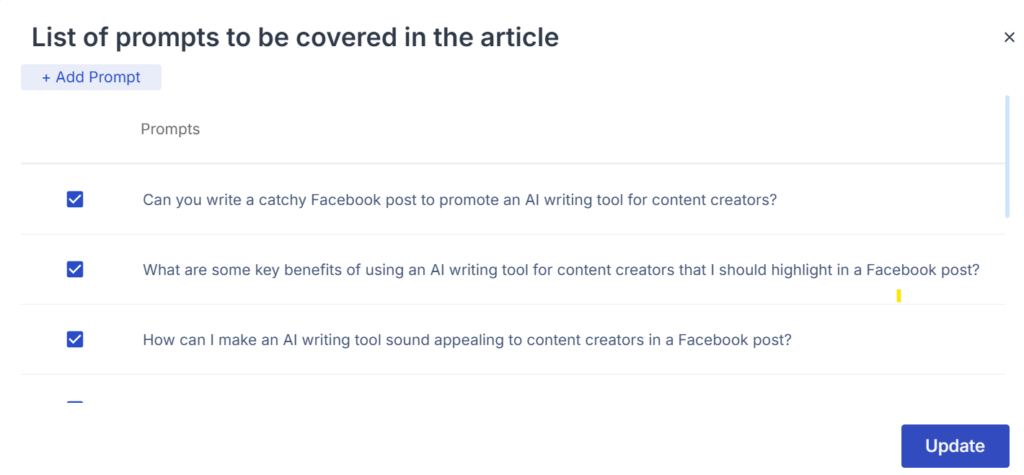
Write a Facebook post promoting an AI writing tool for content creators.
The output can be seen here ->
Tone (Does It Sound Human?)
The tone feels human and approachable. It speaks directly to content creators and addresses their struggles, like writer’s block and tight schedules. The use of friendly advice, short examples, and even emojis makes it relatable. It avoids sounding too robotic or corporate.
Length
The article is long but appropriate for the topic. It covers all important points, including benefits, features, post structure, hashtags, and CTAs. Some sections could be slightly condensed, but overall the length allows the reader to understand the tool fully.
Engaging Hook
The hooks suggested in the article are strong and attention-grabbing. They start with questions, pain points, or bold promises, which is effective for social media. The examples show clearly how to capture attention quickly, which is key for Facebook posts.
| Criterion | Score |
|---|---|
| Human Tone | ⭐⭐⭐⭐⭐ (5/5) |
| Length | ⭐⭐⭐⭐☆ (4/5) |
| Engaging Hook | ⭐⭐⭐⭐⭐ (5/5) |
📊 The Final Scalenut Review
| Criterion | Score |
|---|---|
| Ease of use | ⭐⭐⭐☆ ☆(3) |
| Content quality | ⭐⭐⭐⭐⭐ (5) |
| SEO usefulness | ⭐⭐⭐⭐☆ (4) |
| Speed | ⭐⭐⭐⭐☆ (4) |
| Value for money | ⭐⭐⭐⭐⭐ (5) |
Want to see how this tool compares to others?
Check our full comparison before you decide.
View Best AI Writing Tools in 2026